Exhibition detail
Liu Zexuan & Wang Xun: Tended Wildness
Dates
May 30 - Jul 17
Location
Room 105, Building 6, No. 50 Moganshan Road, Shanghai, China 200060
Putuo
Shanghai
Press Release
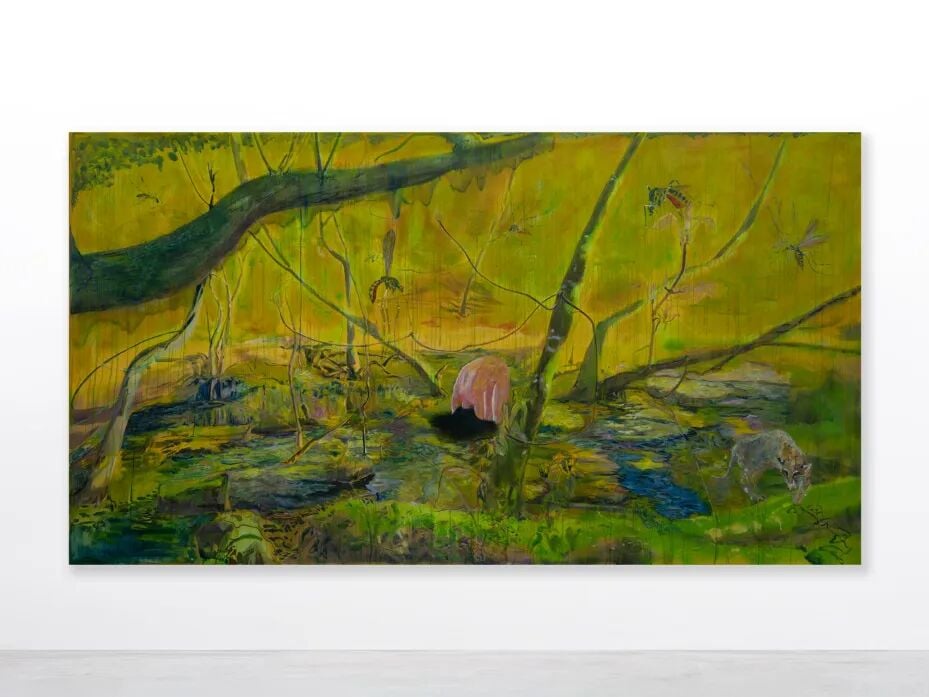
Liu Zexuan’s paintings consistently revolve around a specific sense of defamiliarization. This defamiliarization does not stem from a fantasy world, but precisely from reality itself—from trees accidentally encountered during hikes, unrecognizable traces at the edges of forests, animals seen in natural history museums, and experiences within foreign landscapes that cannot be immediately categorized. The cheetahs, male bees, tiger cubs, moths, and birds in his paintings all seem to drift between realistic observation and mythological imagination (many animal figures are repeatedly erased and repainted, vanishing and reappearing in the same spot on the canvas), all belonging to an animistic world. Rather than constituting a mysterious narrative, these figures record a cognitive process—an attempt to re-establish connections within an unfamiliar culture.
Notably, these animals and supernatural beings are not endowed with symbolic, definitive meanings. Instead, they act more like mediums, providing an interface where different knowledge systems can briefly encounter one another. Through them, rationality and myth, experience and imagination, local knowledge and globally fluid cultural experiences overlap, continuously generating new spaces for interpretation. Mountain gods and witches also remind us that the world may not be completely transparent; rational knowledge need not obscure all domains, as alternative ways of interpreting the world still exist.
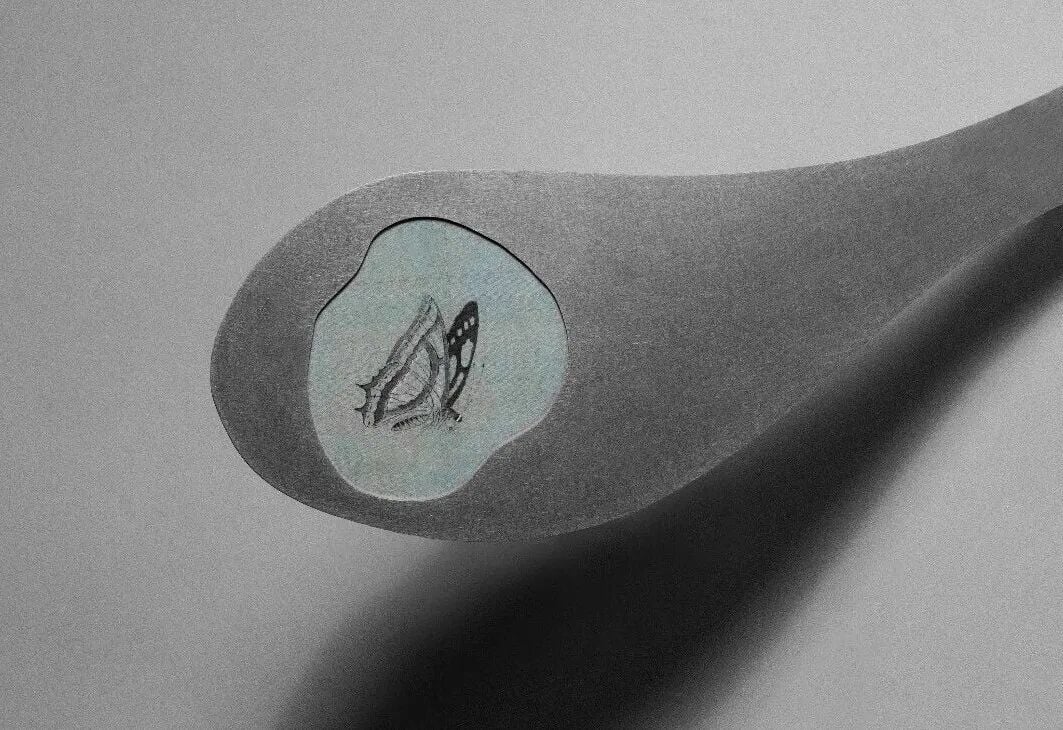
Wang Xun’s work originates from long-term observations of stray cats, yet rarely depicts the cats themselves directly. Rather than their physical forms, she focuses more on how perception takes place. The works on display this time primarily utilize silk, Xuan paper, metal, and ceramics, creating a light and open spatial structure between painting and installation. Cat teasers are detached from their concrete forms as objects, transforming into drifting trajectories and abstract color blocks on vibrantly colored silk paintings. Soft textiles, rigid metals, and fragile ceramics support and pull against one another; different materials maintain their respective textures while constantly altering each other’s mode of existence.
Overlaying and penetrating form crucial visual clues in her installations; the viewer's gaze passes through layered, intersecting structures, being delayed, obstructed, or redirected along the way. Her early training in traditional Gongbi (meticulous brushwork) painting has endowed the artist with an acute sensitivity to detail and texture. This precision does not merely rest on the surface of the image, but is translated into a meticulous organization of spatial rhythm and the viewing process. In her work, the world no longer unfolds around the human gaze but moves slowly between different perceptions.
Images of the exhibition