Exhibition detail
Navigations in the flesh
Dates
Nov 9 - Apr 10
Location
7F, South Side of Ruijin Building, No. 205 Maoming South Road, Shanghai
Huangpu
Shanghai
Press Release
Artists and Projects: Guo Fengyi, Xin Liu, Lu Yu, ORLAN, Song Kun, Vik Muniz, Man Mei-To, Ye Linghan, Zhang Ding, Zhang Peili, Medical Protorype, The Medical Archive
Mediacal Support: Cui Wenguo, Professor, PhD Supervisor, and Director of the Ruijin Hospital 3D Printing Studio
“The body is our general medium for having a world.”
As Maurice Merleau-Ponty reminds us, the body is not an object we possess, but the very means through which we enter into and inhabit the world. The body carries memory and inscribes time, yet at the intersection of technology and life it is constantly being redefined — at once a material entity and a symbol continuously reshaped under the projections of culture and power. As gene editing, bionic organs, and artificial intelligence loosen the boundary between the natural and the artificial, the body is no longer merely flesh and blood, but becomes a voyage charged with uncertainty.
The intersection of medicine and art around the body has unfolded in parallel since the birth of anatomy. The dissecting table and the artist’s studio once shared the same body: medicine revealing structural truths, art presenting existential ones.
Artists continue to ask: within the fissures between technology and ethics, how is the body shaped, disciplined, deconstructed, and remade? As life gradually frees itself from biological determinism, do we still insist upon an inalienable boundary of the flesh?
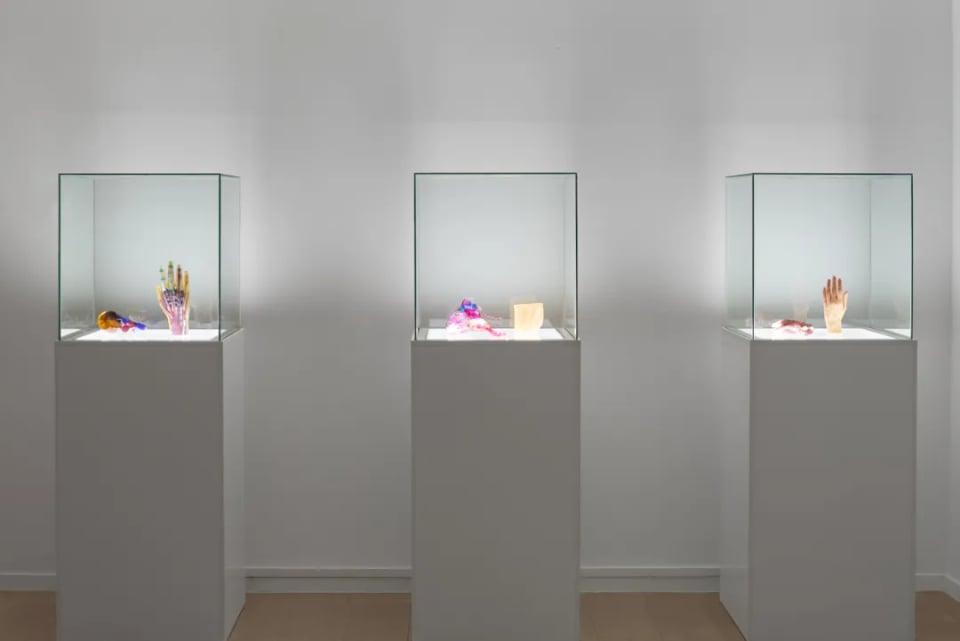
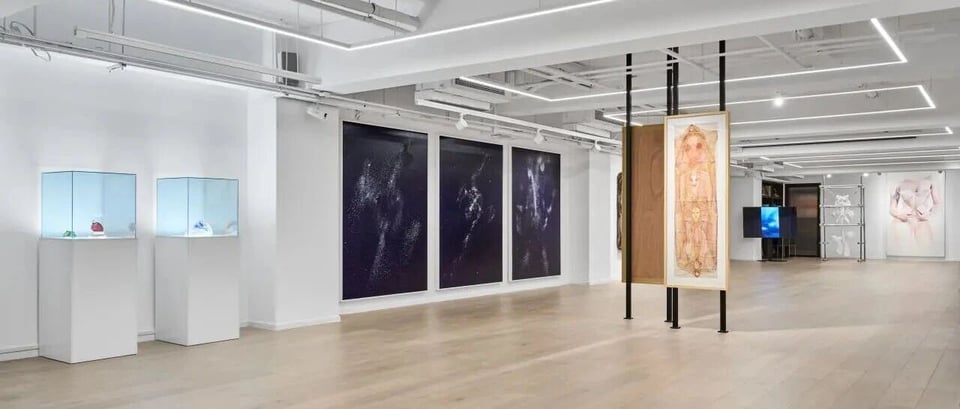
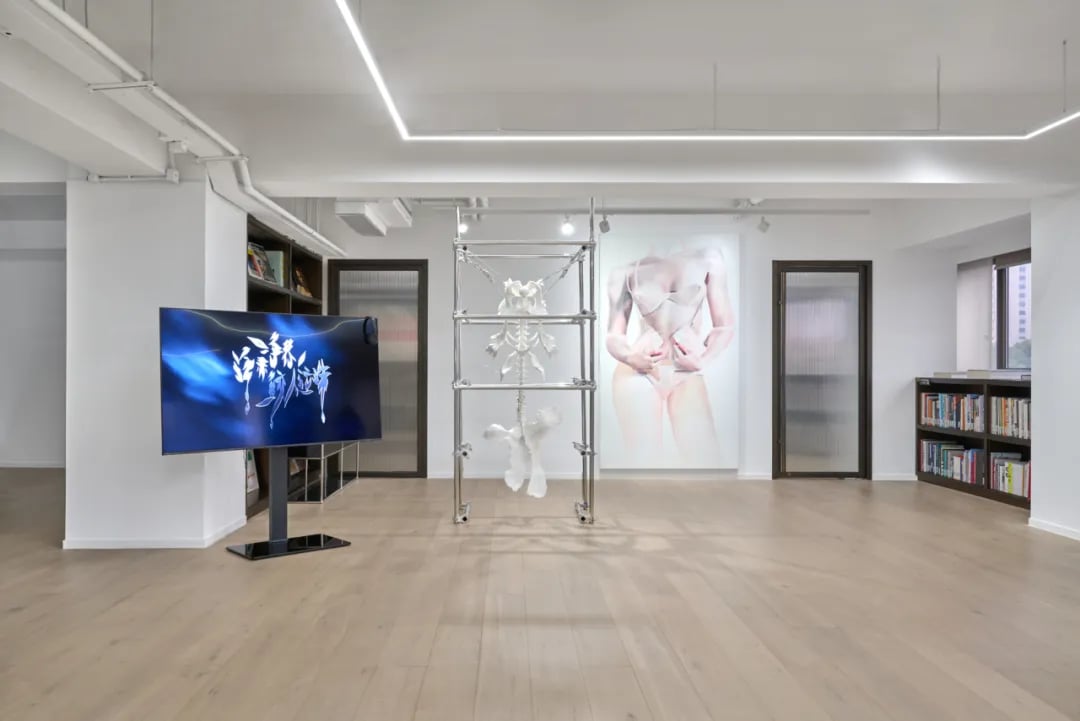
This exhibition charts a “celestial map of the body,” revealing the many fractures within the medicalized body — the encoding and disciplining of gender upon it; the irreducibility of pain and perception; the inscription of DNA; the cutting of bodily boundaries through surgery and dissection; the loss and substitution of limbs; the recalibration of life’s weight and volume; and the emergence of the cyborg body under technological intervention. One end of this star map leads toward medical intervention, genetic rewriting, and mechanical grafting; the other points to the anguish of the soul and the perplexity of identity. As the so-called natural body recedes, how are we to re-anchor our existence amid disorientation?
We may be witnessing a historical paradox: on the one hand, technology enables us to break free from the body’s constraints; on the other, such liberation casts us into deeper estrangement.
Flesh Adrift is a sensory pilgrimage, traversing the precision of medicine and the excess of art, asking how the body may once again become a site for the production of meaning in the contemporary moment.
The body remains the sole locus through which human experience and meaning can appear. It is this very route of the flesh that, in an age entangled between technological emancipation and human disorientation, compels us to seek anew an anchor for our being.
— Text by Zhu Yujie
Images of the exhibition