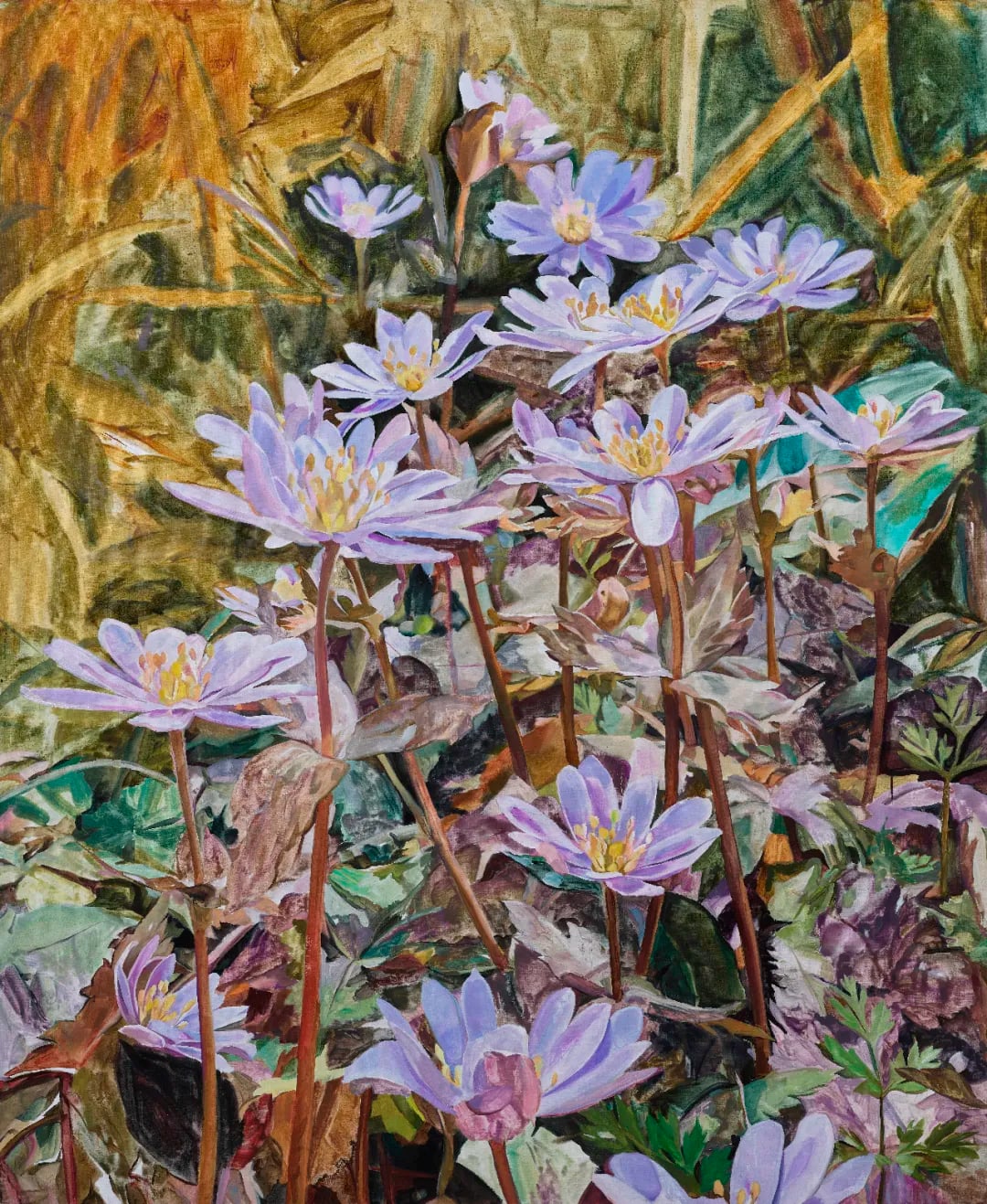
Exhibition detail
The Other Measure
Dates
Jul 10 - Sep 5
Location
2F-205, 30 Wen'an Road
Jing'an
Shanghai
Press Release
Participating Artists: Chen Li, Chen Xiaozhi, He Xun, Wang Yiquan, Xu Zhe
We live in a world accustomed to measurement. Minerals are designated as reserves, plants are assigned to genera and species, subterranean spaces are mapped as energy grids, and the earth's surface is organized into transportation and logistics networks. The earth appears already measured, classified, and named. Yet when we trace the histories of these ways of knowing, we find that they are far from neutral forms of knowledge. Rather, they are processes through which reality is organized and order is produced.
Since the seventeenth century, alongside colonial expansion and the formation of global trade networks, European naturalists began systematically documenting and cataloguing plants, animals, minerals, and landscapes from around the world. Observers such as Georg Eberhard Rumphius spent years recording the natural world across the islands of Southeast Asia, producing notebooks that combined meticulous morphological descriptions with poetic imagination and personal experience. Later, Carl Linnaeus established a systematic taxonomy that brought nature into a clear, reproducible, and transmissible system of classification. At the same time, maps, images, specimens, archives, and commodity packaging gradually became essential tools for knowing and circulating the world. From poetic observation to standardized numbering, from lived experience to abstract systems, the earth ceased to be merely an environment inhabited by humans and became something that could be measured, recorded, displayed, and exchanged.
Yet measurement is never an endpoint, nor is it the only way of knowing. Before these epistemic systems emerged, encounters between humans and the earth unfolded more slowly and with greater uncertainty. Even after such systems took hold, the experiences and forms of perception they excluded never entirely disappeared. Our understanding of the world is not completed once and for all; it is continuously shaped through the interplay of history, power, technology, and circulation, while being repeatedly unsettled and rewritten through the echoes of ruins, new forms of growth, and the overflow of feeling.
Titled The Other Measure, this exhibition considers "measurement" not only as scientific calculation or quantification, but also as the acts of naming, classifying, recording, mapping, and displaying through which humans come to understand the world. Rather than offering a broad account of the Anthropocene, the exhibition approaches these questions through specific materials, images, sounds, and embodied experiences. In doing so, it asks how systems of knowledge shape our relationship with the earth, and whether other modes of perception and understanding might exist beyond them.
Images of the exhibition