Exhibition detail
Yimiao Liu: The Gravity of Return
Dates
Aug 1 - Oct 10
Location
Room 105, Building 6, No. 50 Moganshan Road, Shanghai, China 200060
Putuo
Shanghai
Press Release
Yimiao Liu’s first solo exhibition in China, curated by Zirui Zhuang, opening on August 1, 2026. Bringing together a significant body of Liu's recent work, the exhibition examines painting not as a medium of representation but as a methodology through which memory, lived experience, and language are continuously dismantled and reconfigured. Traversing the overlapping terrains of culture, language, and temporality, Liu's practice occupies the intervals where these systems converge and diverge, allowing experience to assume new forms through an ongoing process of translation and transformation.
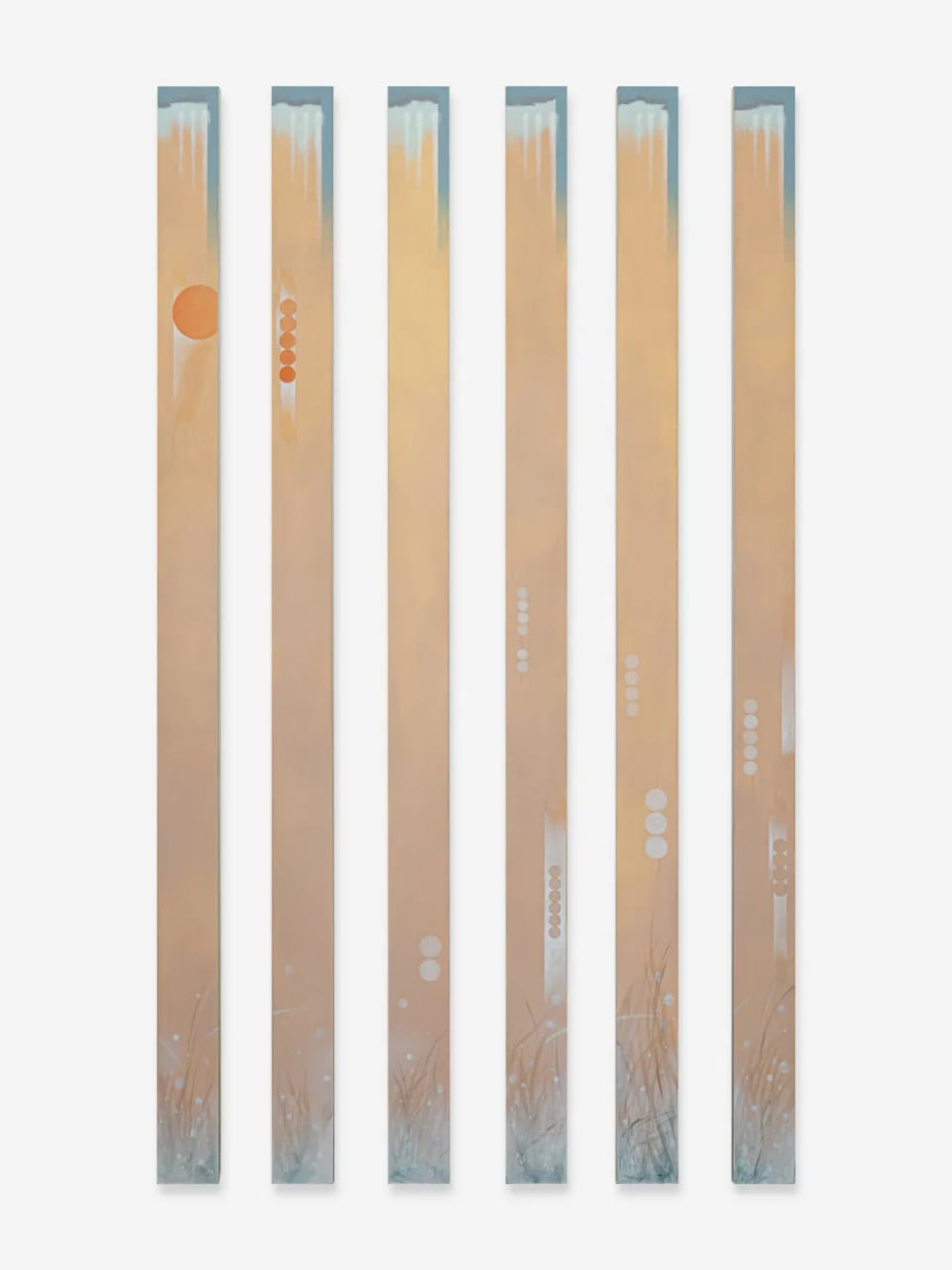
Rather than referring to a straightforward notion of homecoming, The Gravity of Return proposes a multidirectional trajectory of becoming. The Chinese title, Zhuisu (坠溯), invokes the simultaneous forces of descent and return: experience is continually propelled forward while turning back upon itself, and it is precisely through the act of departure that one's understanding of belonging is reconstituted. The waterfall functions as the exhibition's central metaphor. It is not a static natural phenomenon but a process in perpetual formation. Every drop that composes it is constantly replaced, and no single instant can encompass its totality. Yet it is precisely through this uninterrupted flow that the waterfall remains perceptible as a coherent whole. Likewise, Liu's practice is less concerned with arriving at a fixed destination than with how experience sustains its continuity through constant transformation.
Rather than seeking to answer the question of where one's true home lies, The Gravity of Return resists framing migration as a narrative of cultural identity. Instead, Liu is concerned with a more fundamental question: how does one re-establish a relationship with the world when familiar languages, social structures, and environments are continually transformed? Within this body of work, translation emerges as a central mode of thinking through experience. Translation here exceeds the passage from one language to another; it unfolds between reality and memory, body and image, perception and painting. Experience is never carried intact into another language. Rather, it is reorganized, recontextualized, and allowed to assume new forms within each act of translation. Painting operates in much the same way. For Liu, it does not reproduce reality but serves as the site where experience is continuously translated, negotiated, and brought into being.
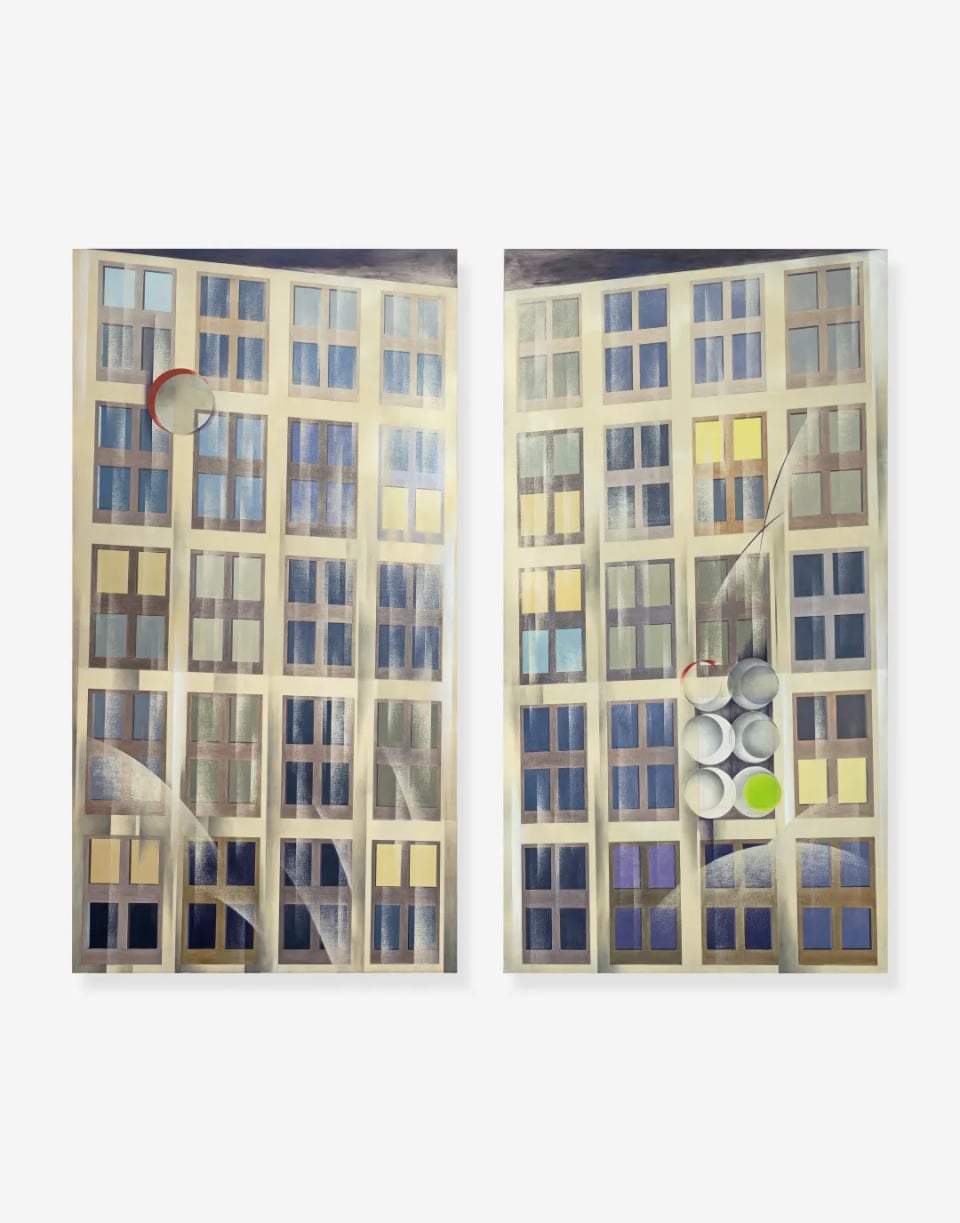
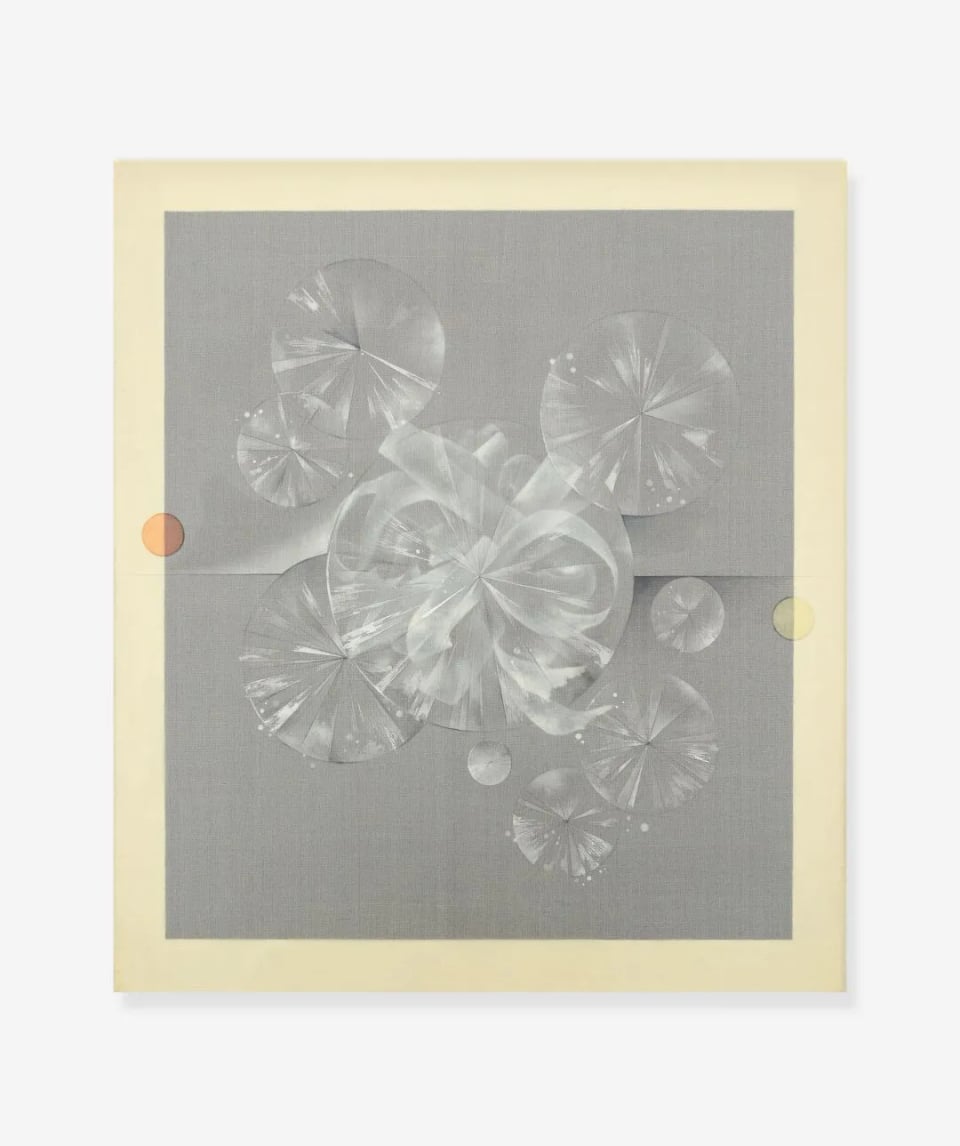
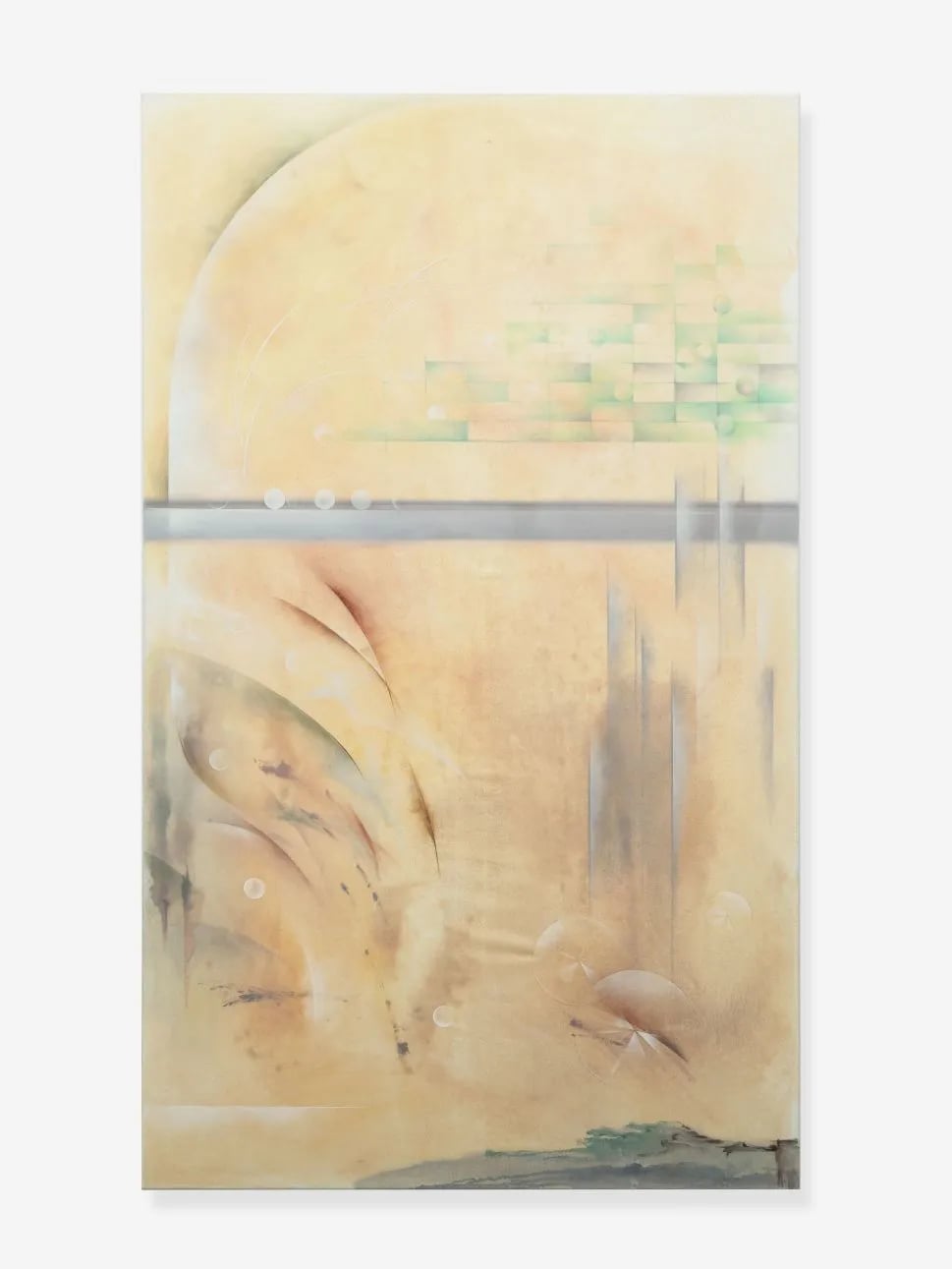
This mode of thinking is equally manifested in Liu's exploration of materiality. Several works presented in the exhibition are constructed through the coexistence of two distinct pictorial systems: an oil painting executed on linen forms the underlying image, over which is superimposed a second image rendered in mineral pigments on silk. Rooted in different historical traditions, these two material systems overlap and permeate one another within a single work. They neither establish a fixed hierarchy nor correspond to a simple binary between "East" and "West." Rather, they continuously generate new visual relationships in the act of viewing. The translucency of the silk keeps the image in a perpetual state of partial revelation and concealment. Viewers are unable to immediately determine the spatial relationship between the pictorial layers, nor can they easily discern whether a particular color originates from the underlying oil painting or from the silk image suspended above it. Viewing therefore ceases to be the reading of a singular image and instead becomes a continual movement across different material registers. This visual experience of continual layering and emergence parallels the process of translation itself, in which the source text and the translated text continually revise, interrupt, and reshape one another, together producing a mode of meaning that remains open, relational, and in constant flux.
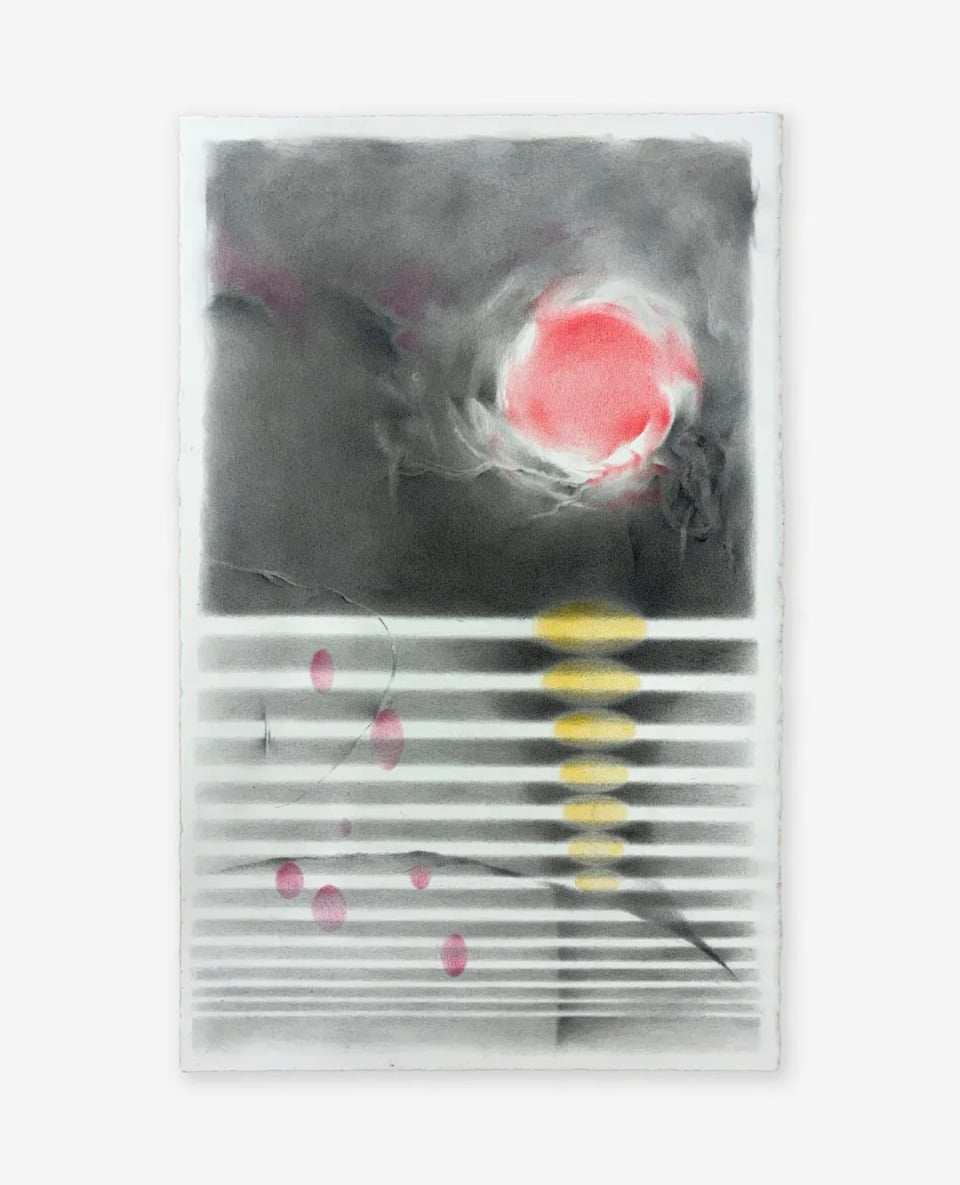
Another recurring visual element throughout the exhibition is the circle, which the artist draws repeatedly by hand. These circles are never produced with the aid of instruments; each is rendered freehand. They evoke droplets of water, bubbles, written characters, celestial bodies, or perhaps symbols that have yet to be fully formed. For Liu, the circle is not a fixed visual symbol but a movement in continual becoming. It possesses neither a definitive point of origin nor a true endpoint. Just as a waterfall cannot be defined by any single drop of water, experience cannot be contained within any single language, identity, or moment in time.
The Gravity of Return is ultimately concerned not with the movement of a person between different countries, but with how experience continues to exist through processes of continual transformation. When language reshapes expression, memory reshapes the past, and material reshapes the image, can we still recognize the continuity of the same lived experience? Through a body of paintings that are at once poetic and experimental, Liu reopens the possibility of painting as a mode of thinking. The Gravity of Return invites viewers into a visual space that remains in a continual state of flux and becoming.
(Text / Zirui Zhuang)
Images of the exhibition