Exhibition detail
Zhai Wenqing: The Fabricated
Dates
Jul 3 - Aug 25
Location
Beijing East Road No.211, Huangpu District, Shanghai, China
Huangpu
Shanghai
Press Release
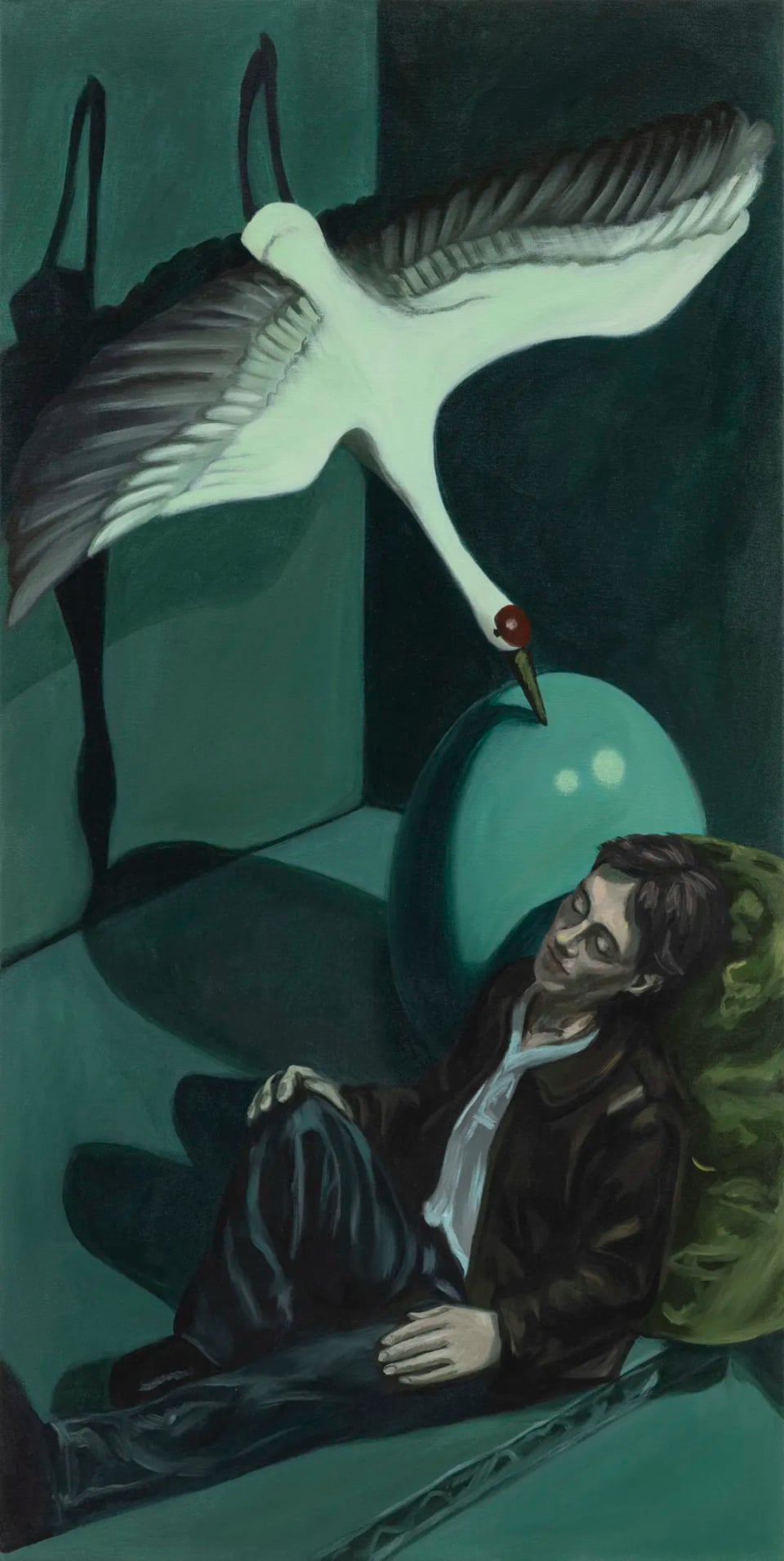
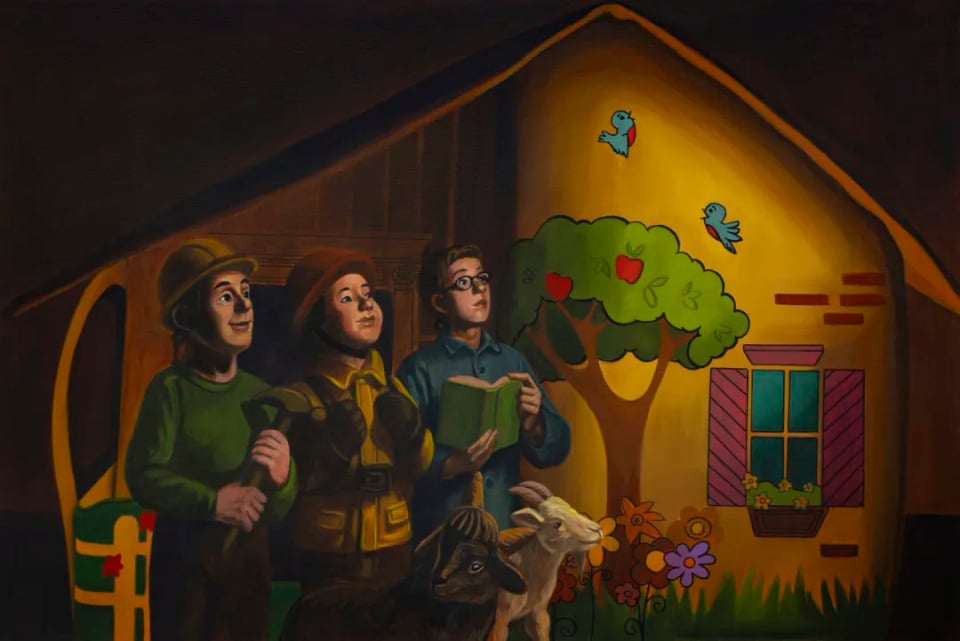
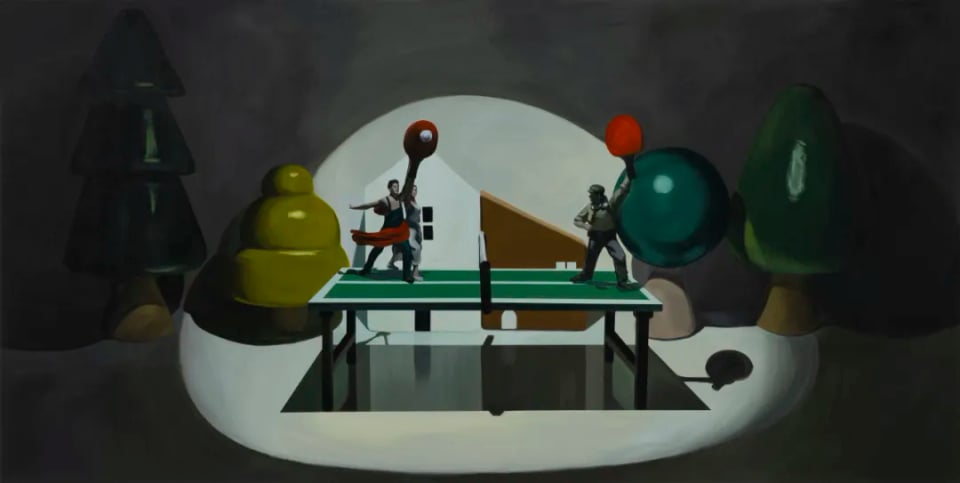
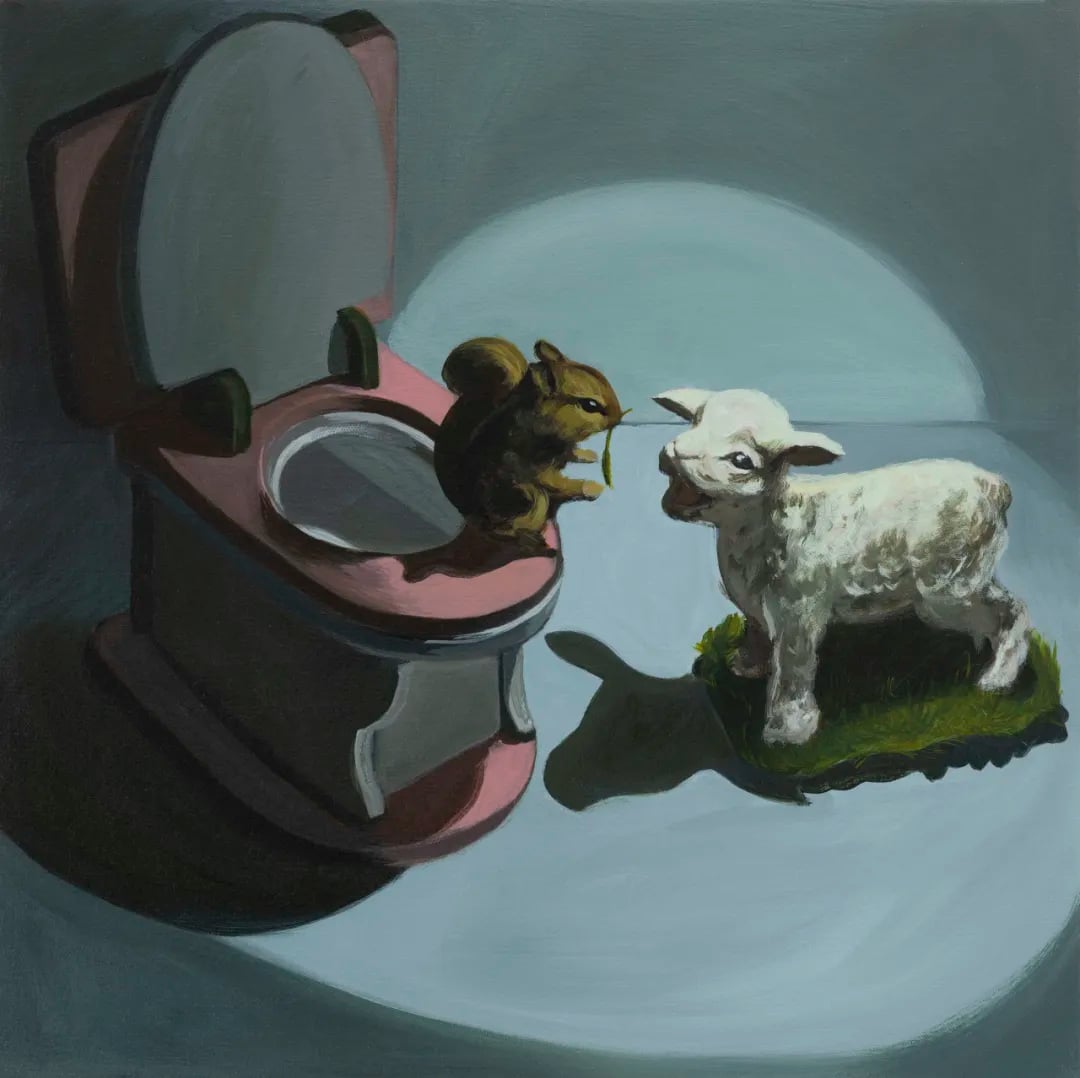
Hive Center for Contemporary Art is pleased to present The Fabricated, the first solo exhibition by artist Zhai Wenqing, opening on July 3, 2026, at Hive Becoming | Shanghai. As the sixty-fourth installment of the Hive Becoming Program (HBP), the exhibition brings together a selection of over ten recent paintings by the artist. A graduate of the Yale School of Art, where she received her MFA in Painting, Zhai Wenqing currently lives and works in New York. Through allegorical scenes staged like toy theatres, her paintings reveal the underlying assumptions that shape how we see, understand, and ultimately believe in the world. Perhaps we do not simply inhabit the world itself; rather, we first come to dwell within pre-existing models through which the world has already been imagined and explained. Curated by Chan Yu Ying, the exhibition will remain on view through August 25, 2026.
The exhibition opens with a series of copied illustrations from The Adventures of Pinocchio, functioning as a wordless prologue that introduces viewers to the “fabricated world” questioned throughout Zhai's practice. Rather than drawing upon the widely familiar Disney adaptation, the artist turns to Carlo Collodi’s original serialized version of 1883. In that early iteration, before subsequent revisions softened its narrative, the story abruptly ended with Pinocchio being hanged by the Fox and the Cat. Repeatedly rewritten over time, this celebrated fairy tale reveals its harsher foundation as an educational allegory: a disobedient puppet is continually instructed in how to become human, while every deviation from the prescribed path results in predetermined punishment. Less a story of personal growth, it emerges as a parable about education, obedience, and the formation of the subject.
If Pinocchio symbolizes a subject awaiting formation, Zhai’s paintings shift attention to the spaces where such formation takes place. For the artist, growth never occurs in a vacuum. When we begin to understand the world, what we encounter is rarely the world itself, but rather a series of models that stand in for it. Over many years, Zhai has collected dolls and figurines from flea markets and second-hand fairs, reflecting on the information and latent influence embedded within these objects. From the division of labour represented in toy sets to the ordering of knowledge in classroom charts, endlessly reproduced social roles and personality types have long become part of the frameworks through which reality is understood.
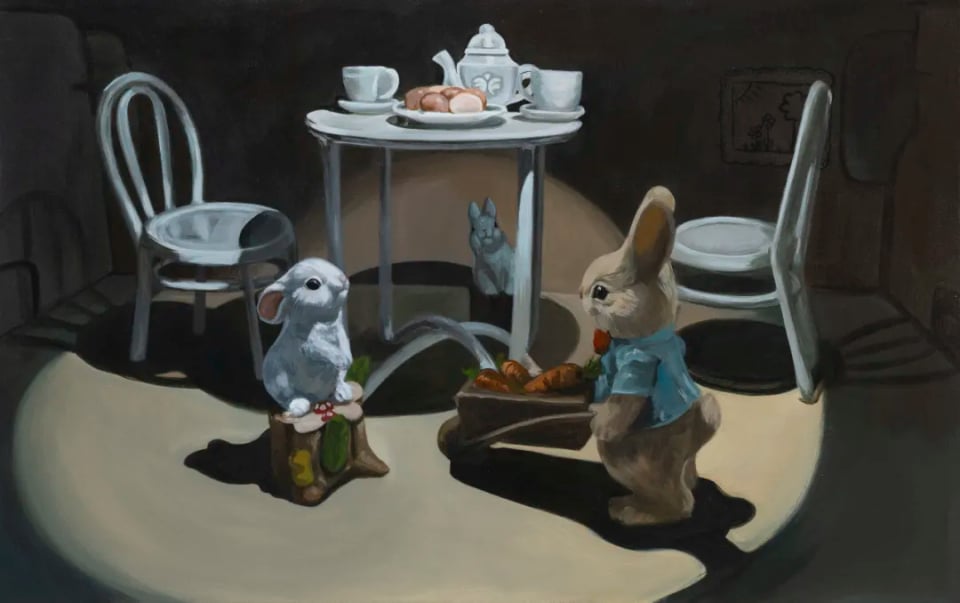
Within these paintings, dolls function simultaneously as characters and as models. The artist constructs theatrical stages for them, arranging pathways of vision through carefully directed spotlights. Human figures, animals, and props are positioned, ordered, and named as though governed by a pre-existing set of rules. Teachers, doctors, mothers, children, and workers appear in succession, yet remain suspended in a state somewhere between authenticity and performance. Like sediments of collective experience, these recurring figures continue to be recognized, inherited, and retold across different cultures and historical periods. Exaggerated and rigid facial expressions, distorted perspectives, and theatrical lighting introduce an atmosphere of absurdity and irony. In doing so, seemingly natural orders, identities, and systems of value once again reveal the traces of their construction.
What these images carry are not natural facts, but social imaginaries produced through continual repetition and narration. Once an idea has been told often enough and reproduced long enough, it gradually loses the appearance of having been constructed at all, eventually entering everyday life as common sense. The Fabricated therefore refers not to fabricated objects, but to meanings already prepared in advance: ready-made identities, ready-made values, ready-made behavioral norms, and ready-made ways of seeing. The images appear to tell stories, yet consistently withhold any definitive conclusion.
In The Fabricated, viewers are confronted not with a fictional fairy-tale kingdom, but with a world that already exists within their own experience. Familiar images, characters, and narratives are subtly rearranged by the artist. When innocent daisies are placed in schoolbooks, when purple becomes associated with authority, when female figures cradle lambs or infants, when children hold cutlery, and rabbits wear neckties, signs that once seemed entirely natural suddenly reveal their constructed nature. Zhai does not seek to uncover a hidden truth concealed behind images. Instead, she repeatedly interrupts the established relationships between familiar symbols, generating new questions through their collision and displacement. Cracks begin to appear within seemingly coherent models of reality, exposing the mechanisms through which worlds are made. Reality itself may never have been a fixed truth waiting to be discovered, but rather something continuously narrated, imitated, and believed into existence.
Images of the exhibition