Exhibition detail
ZHENG Zhilin: Ten Concrete Moments
Dates
Apr 11 - May 30
Location
No. 4, 165 Wuyuan Road
Huangpu
Shanghai
Press Release
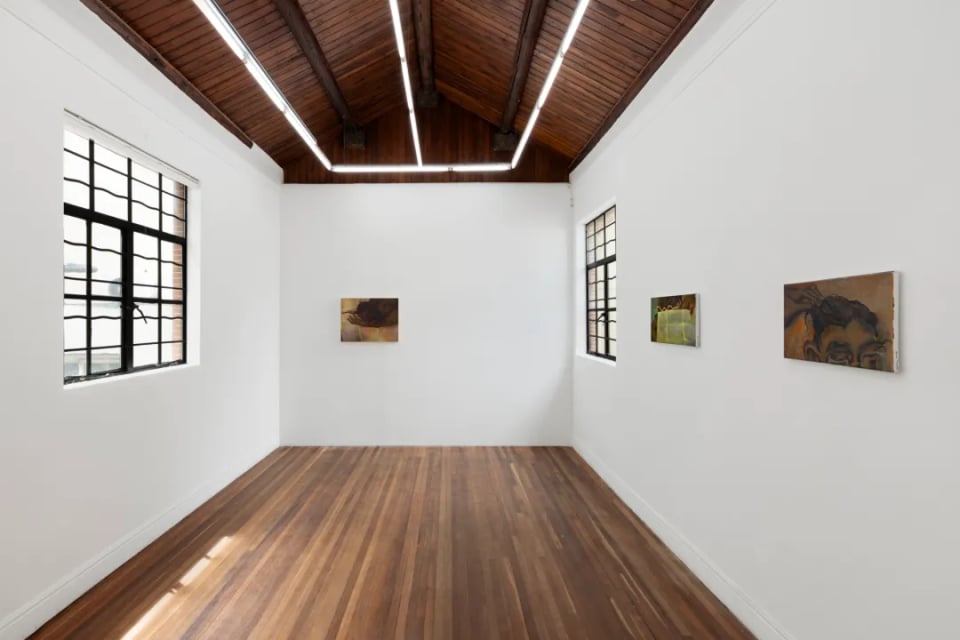
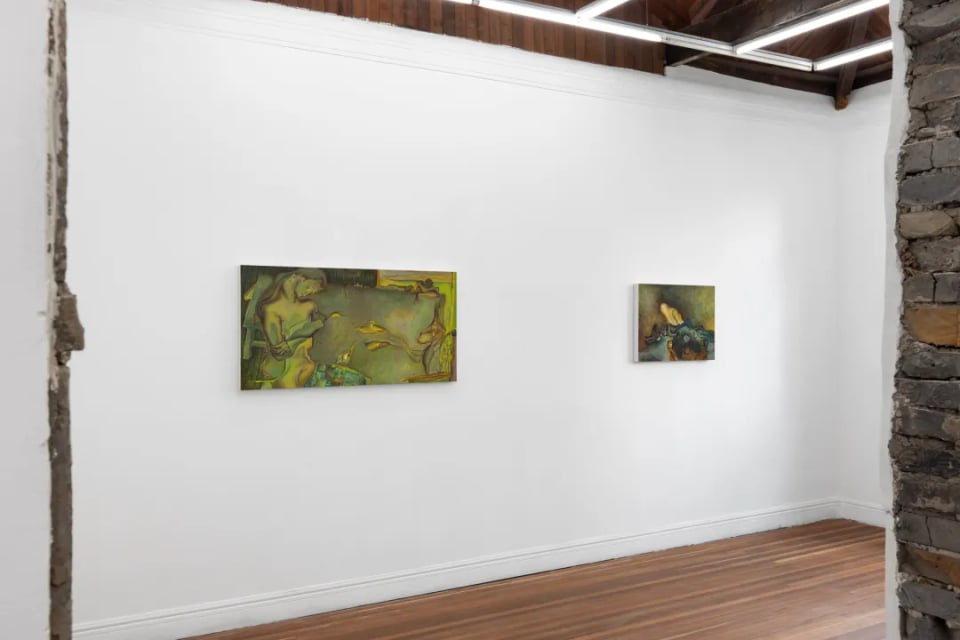
LINSEED presents Ten Concrete Moments, the third solo exhibition by ZHENG Zhilin (b.1991, Guangdong) with the gallery. The exhibition brings together a new group of paintings on canvas and paper that explore the quiet tension of time suspended between stillness and movement. It opens on April 11, 2026 and runs through May 30.
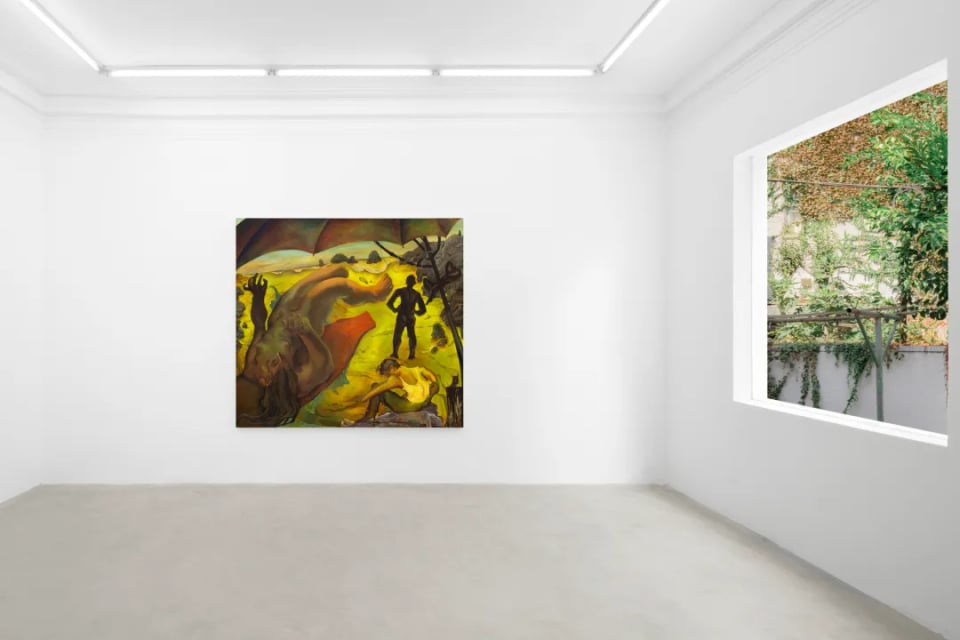
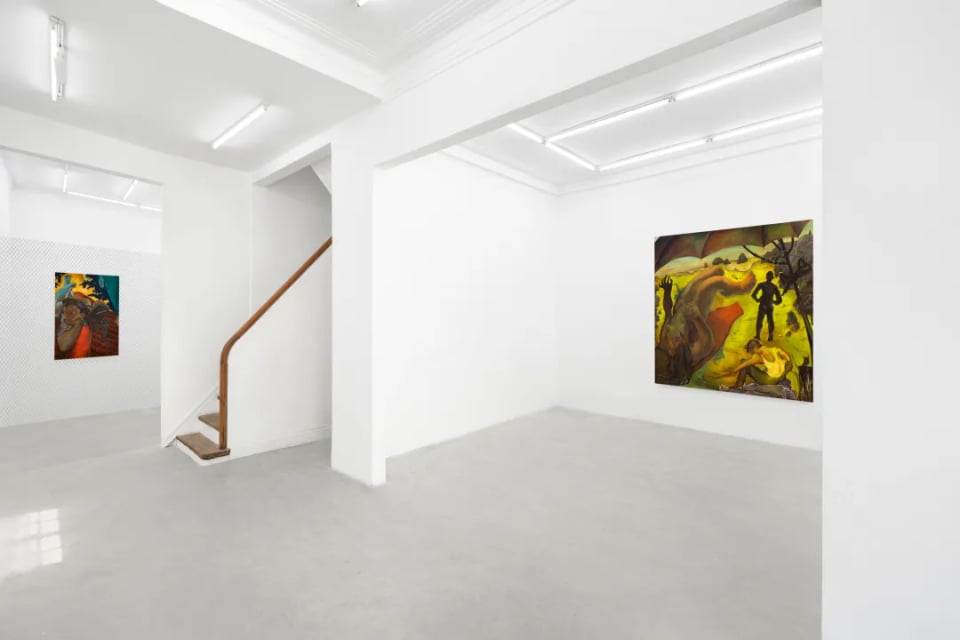
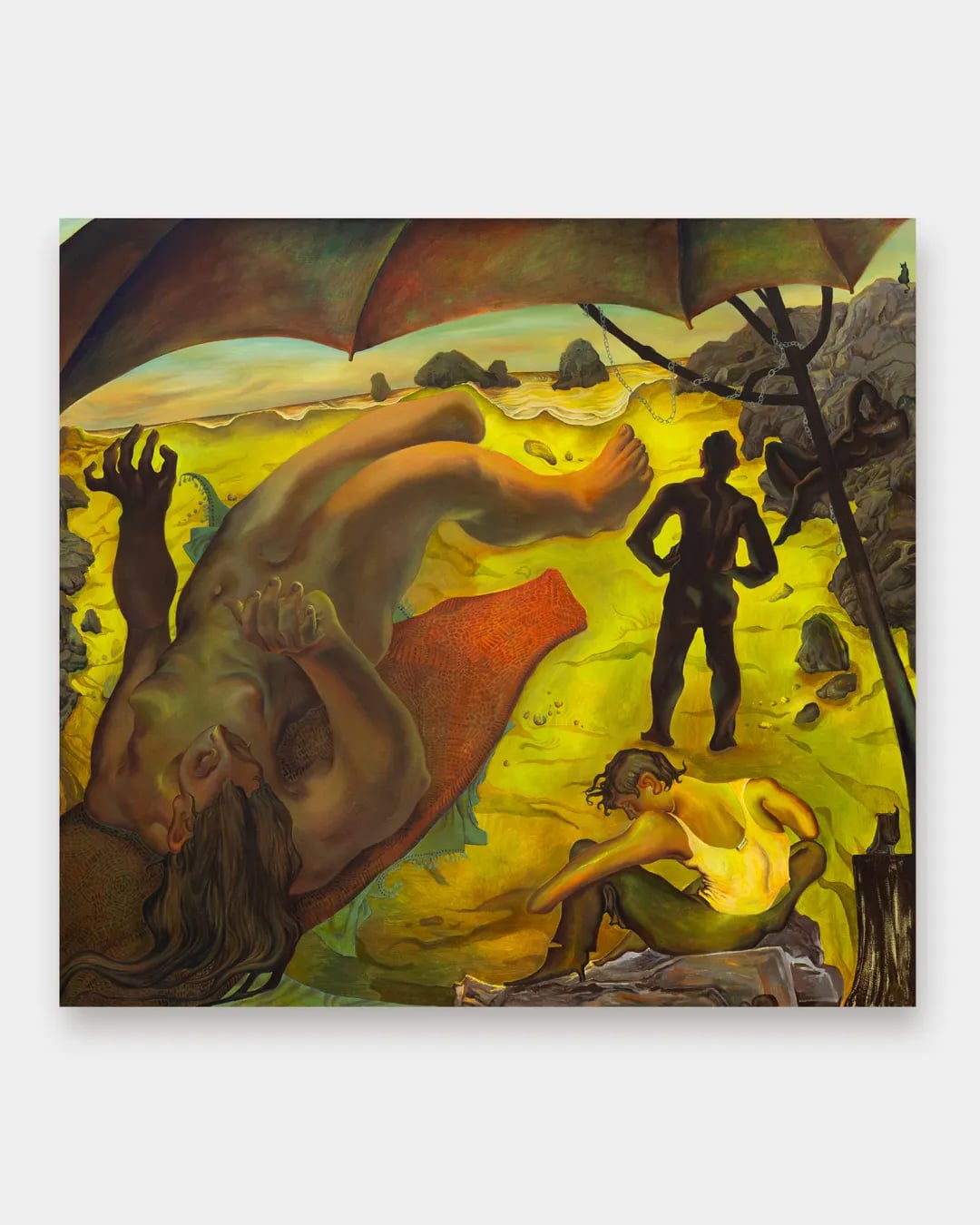
Where the undulating rhythms, theatrical lighting, and lissome, billowing bodies of Zheng’s earlier paintings may evoke spotlit scenes on stage, the works in Ten Concrete Moments unfold like extended long takes from a film lingering on the subtleties of embodied experiences. At the centre of the exhibition is the nearly two-metre Petrichor, in which the silhouettes of the variously poised figures recall the shape of Henri Matisse’s figure paper cuts. Echoing the olfactory cue experienced by its title, the figures, though quiet and nearly motionless, seem nevertheless alert to their corporeal senses: every inch of their skin and muscle appears attuned to the fleeting sensations from the surroundings, as if relishing the elusive world enveloping them.
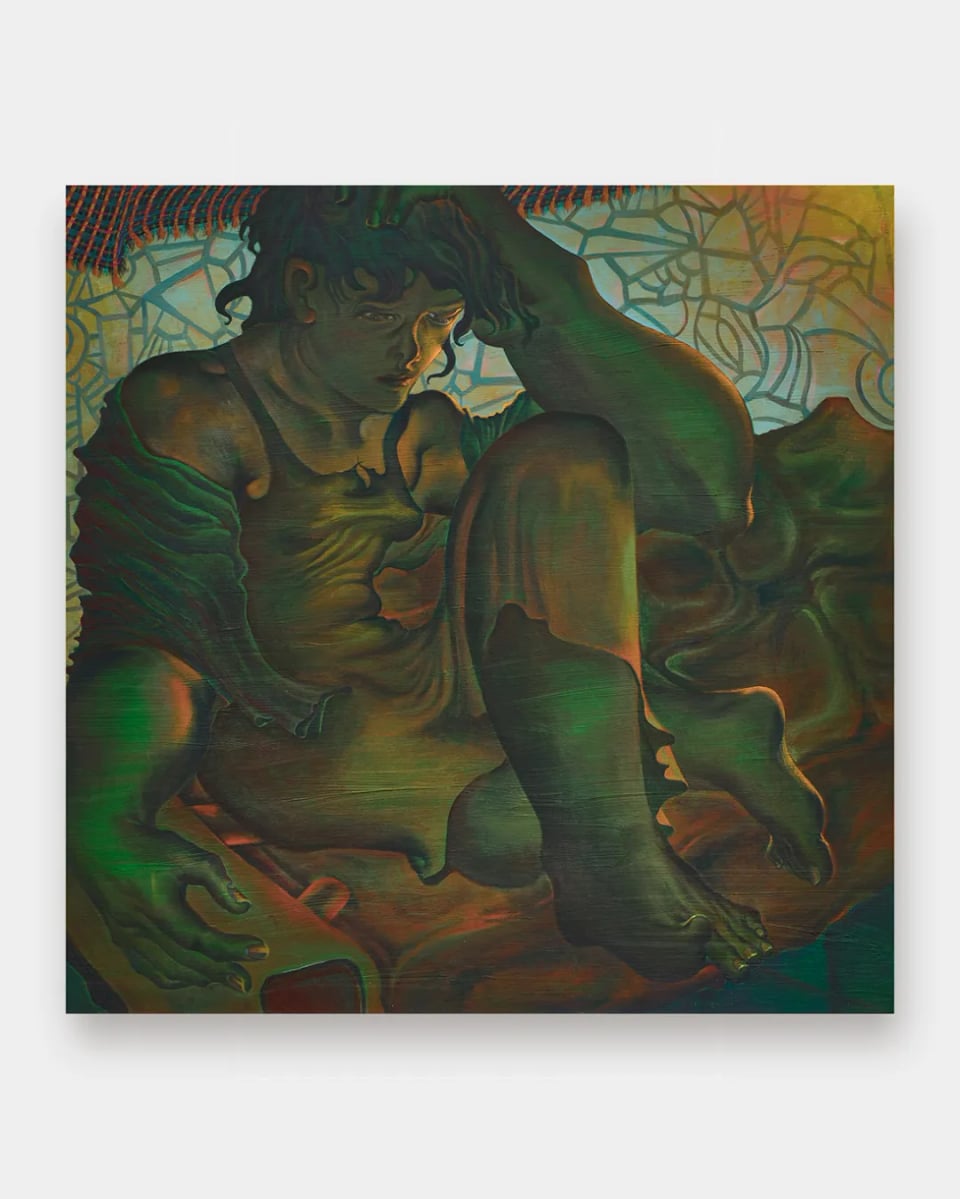
In his 1967 book What Is Cinema?, film theorist André Bazin reflects on the relationship between characters and their cinematic surroundings – how camera language and mis-en-scène are often employed to mirror a character’s inner life. Bazin believes that the long take, in particular, carries a kind of ethical significance: instead of steering the viewer’s attention through cuts and montages, long takes leave meaning to unfold in time, over uninterrupted acts of seeing. In this sense, Zheng’s paintings produce a comparable effect. Through her careful orchestration of light and space, her figures often become inseparable from the space they inhabit. In When the Bell Tolls, Before the Decision, the figure's face remains impenetrable as the arrangements around her suggest the shape of a thought forming – her skirt, skin and folds of bedsheet dissolve into one another, all becoming a mass of fluorescent green that harbors a quietly gathering drama. Yet the titular bell signals the passage of time – perhaps even pressing in. Together these cues gesture towards the prolonged oscillations that may or may not lead to a resolution.
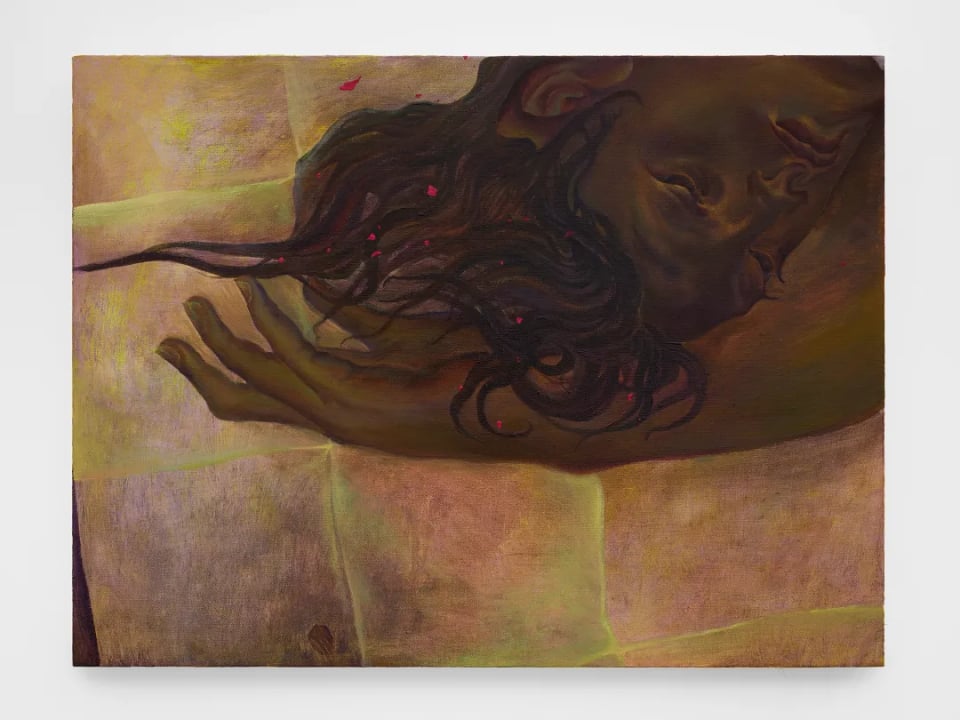
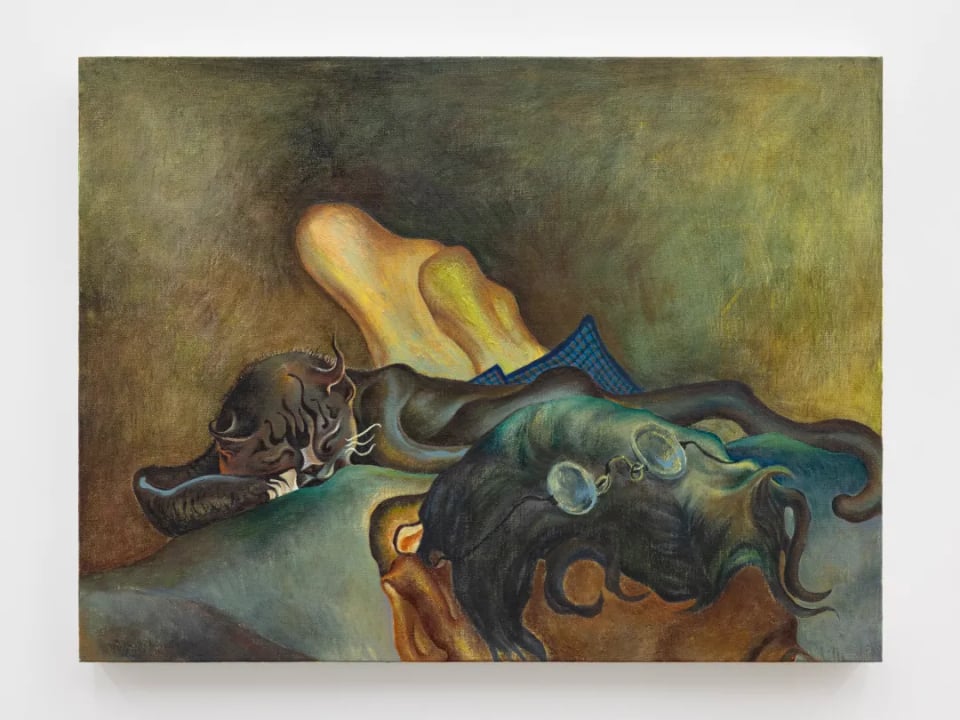
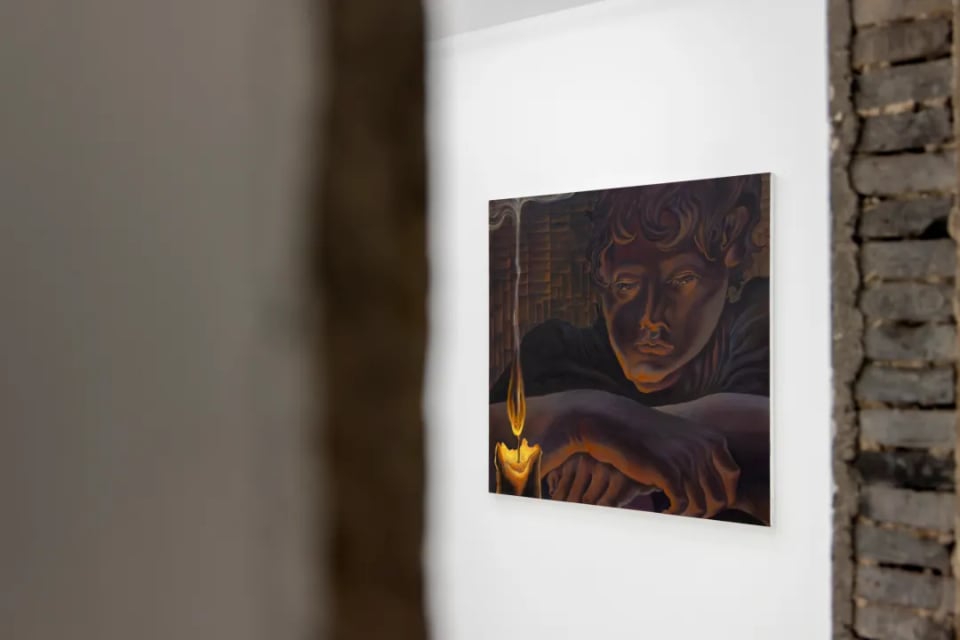
Often appearing still and agitated at once, the delicate tensions in Zheng’s paintings resemble the temporality of a film still – each composition appears to preserve a snippet from a reality that bubbles with a still fermenting momentum. In Meditations on a Bonfire, a figure watches a lit candle. Time seems to pause, yet his thoughts appear to drift and spread. After the Last Page captures a moment poised between reading and its completion: the shape of the reader riffs off of that of his cat, while the title points out the brevity of such a visual balance. Films Sustain the Midnight Sleep adds a more pronounced sense of ambiguity. An earthworm wriggles across a creased sheet of paper, while the figure holding it looks rather indifferent, her expression hovering somewhere between absorption and a distracted daydream.
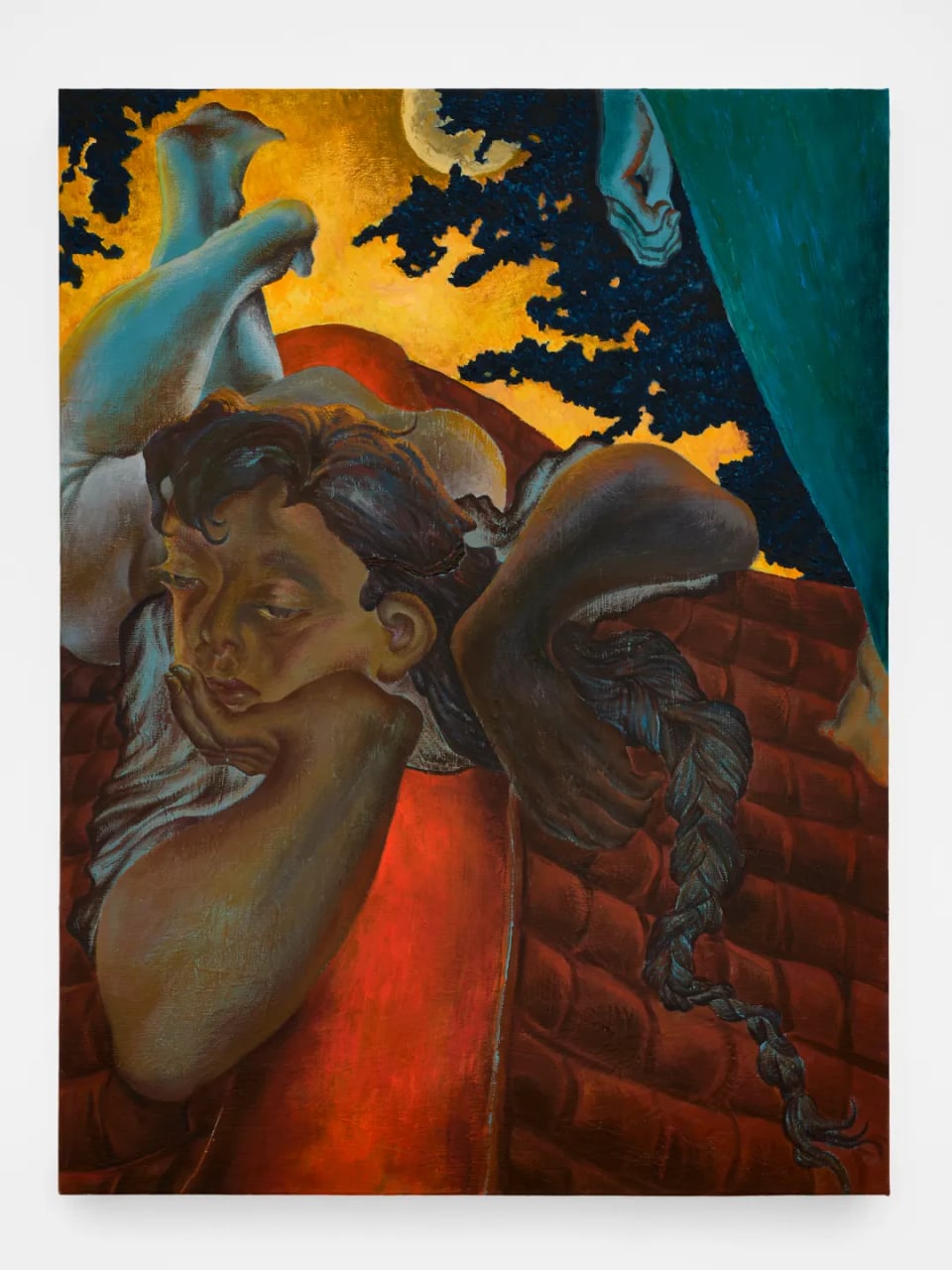
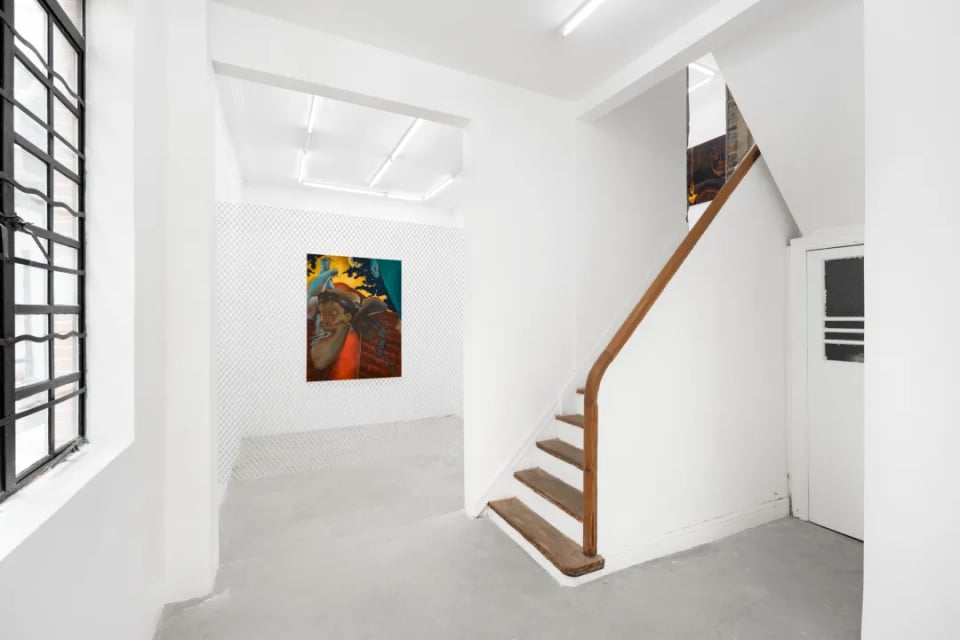
Zheng’s treatment of time and space may ultimately point toward a question of presence. The artist often speaks about capturing a feeling of “being alive”, and of her primary influences she has cited Mexican muralist Diego Rivera and Thomas Hart Benton, painter of the American Midwest – both were known for their depictions of ordinary lives, their epic group scenes vivid, concrete and filled with a vital corporeal agency. In Zheng’s work, this attention to agency feels equally present, though more reserved in tone. When She Looks Down pictures a girl lying on a red rooftop, facing away from another figure barely visible on the opposite side and looking off beyond the edge of the painting. Could her glance suggest aversion, boredom, or simply at ease in the moment? The painting offers no clear answer. What it does convey instead is a strong sense of “being there”. In each of these scenes of brief pauses, Zheng’s paintings seem to provide an affirmation of existence itself – an articulation of our total immersion in the present.
Images of the exhibition