Exhibition detail
Mirko Canesi: The Dust Eater
Dates
Apr 2 - Jun 6
Location
No.9, B1F, Lane 9, Qufu Road, Jing'an District, Shanghai
Jing'an
Shanghai
Press Release
The title The Dust Eater derives from a comic-book figure: a woman with demonic blood who, upon activating her power, vibrates her body in all directions—360 degrees, save for her feet—acquiring a stereoscopic, all-encompassing perception. She is able to register signals from every direction, anticipating and deflecting incoming threats. And yet, her face remains pressed to the ground. It is from this posture that she is named: the Dust Eater.
To occupy the lowest position while possessing the most expansive perception—this paradox forms the central metaphor of the exhibition. It suggests a mode of seeing that adheres to the surface of matter, or even sinks into it: not a gaze from above, but one mediated by the body, assembling knowledge through fragments, residues, and neglected remains. Under conditions of dense information and extended temporal spans, such a position may give rise to propositions that exceed immediate visibility.
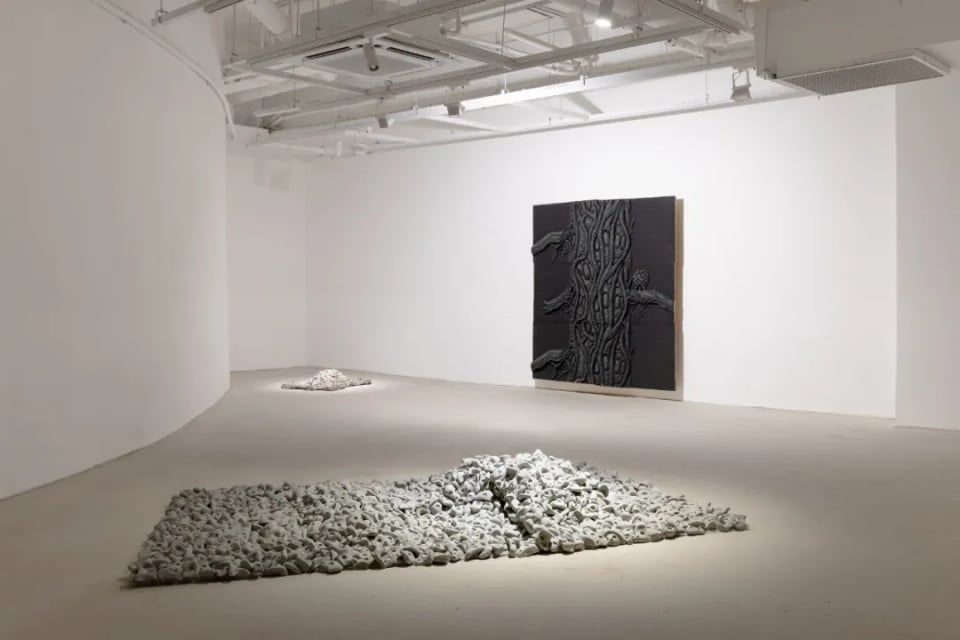
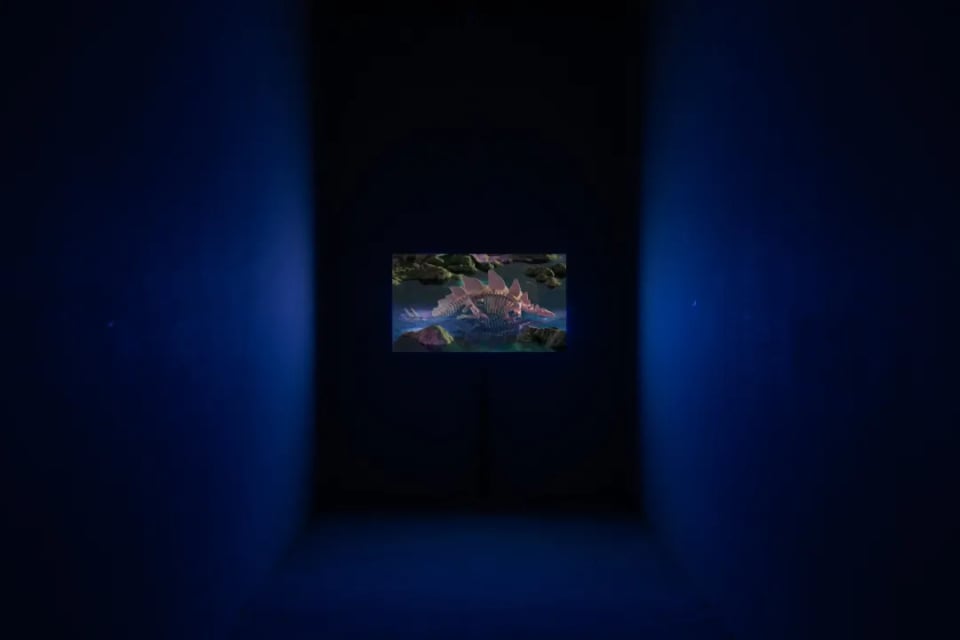
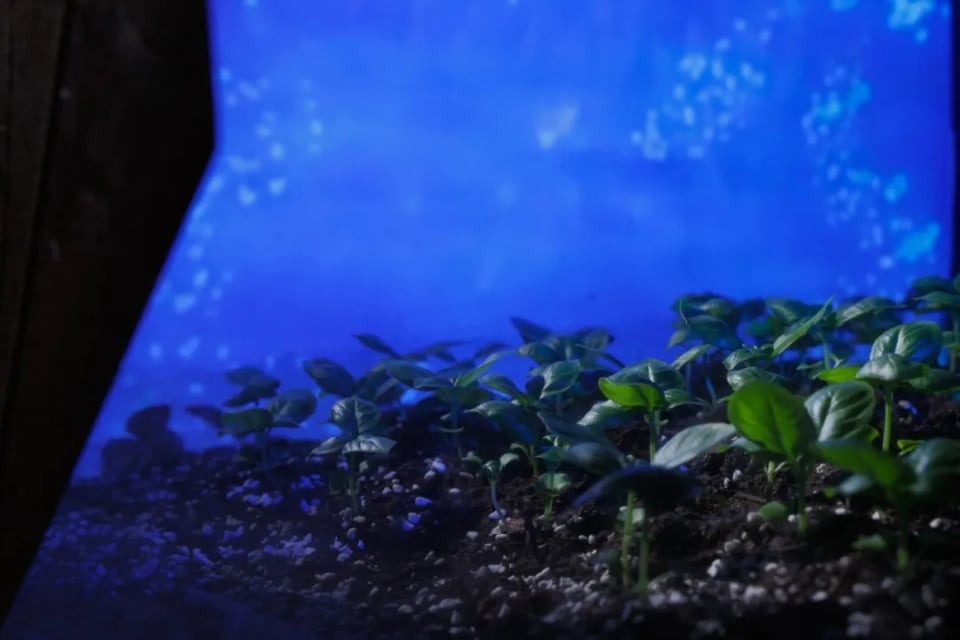
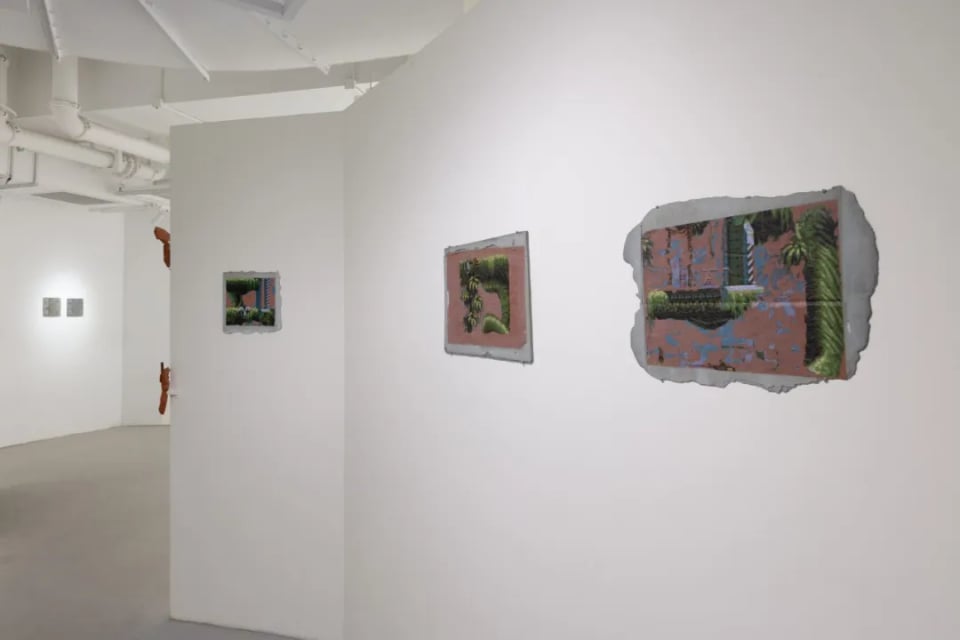
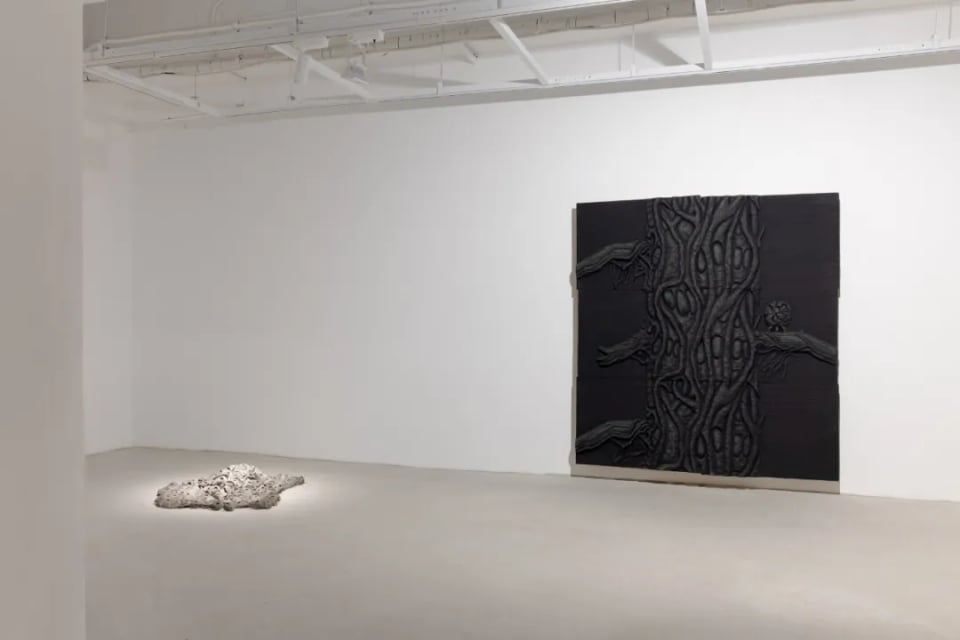
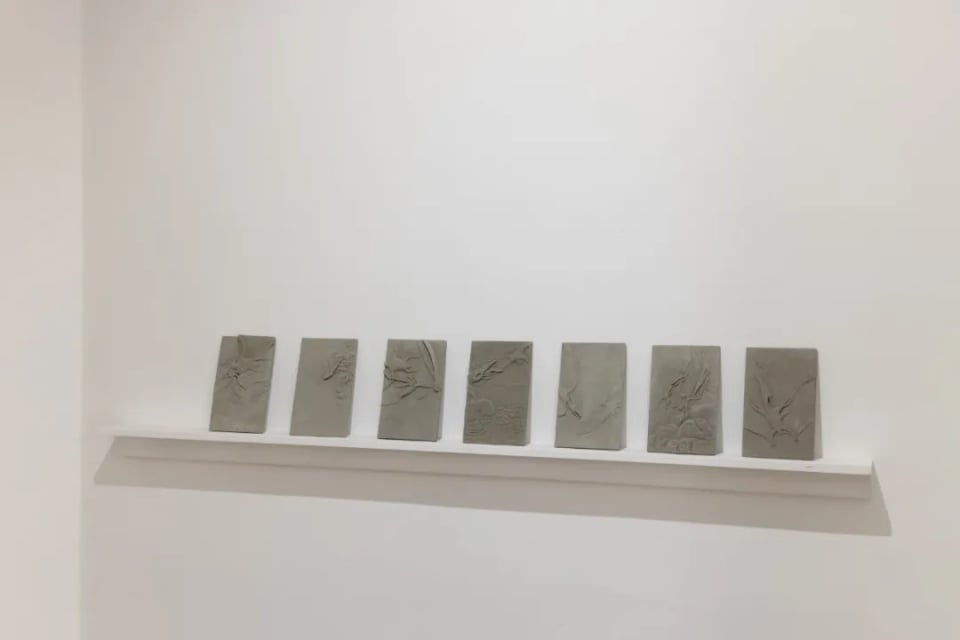
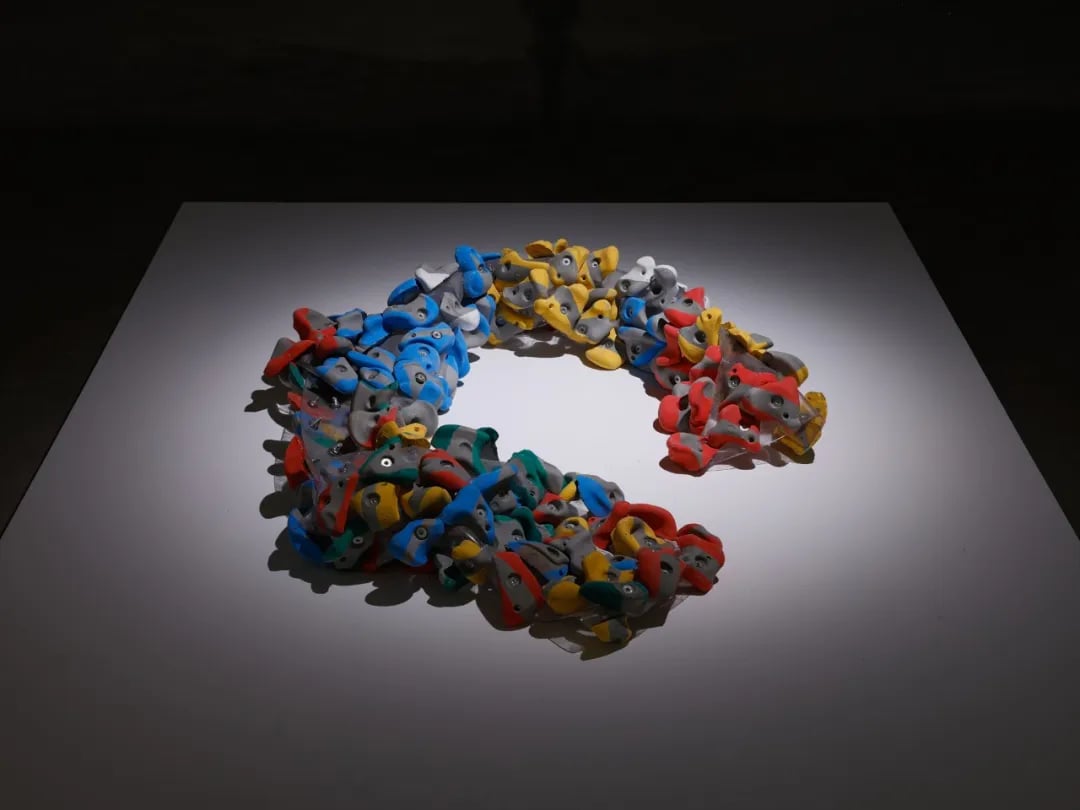
With an almost indiscriminate intensity, the works circle around a rewritten language of nature. Whether in the dismantled and recomposed artificial “rocks,” the plants growing within a space suspended between greenhouse and cinematic narrative, or the images extracted and reprocessed from video games, nature no longer appears as an original or coherent whole. Instead, it persists as fragments, substitutes, and reproductions. This estrangement is not incidental; it signals a conscious attempt to break from states of passive conditioning, even as instinct continues to bind us to them.
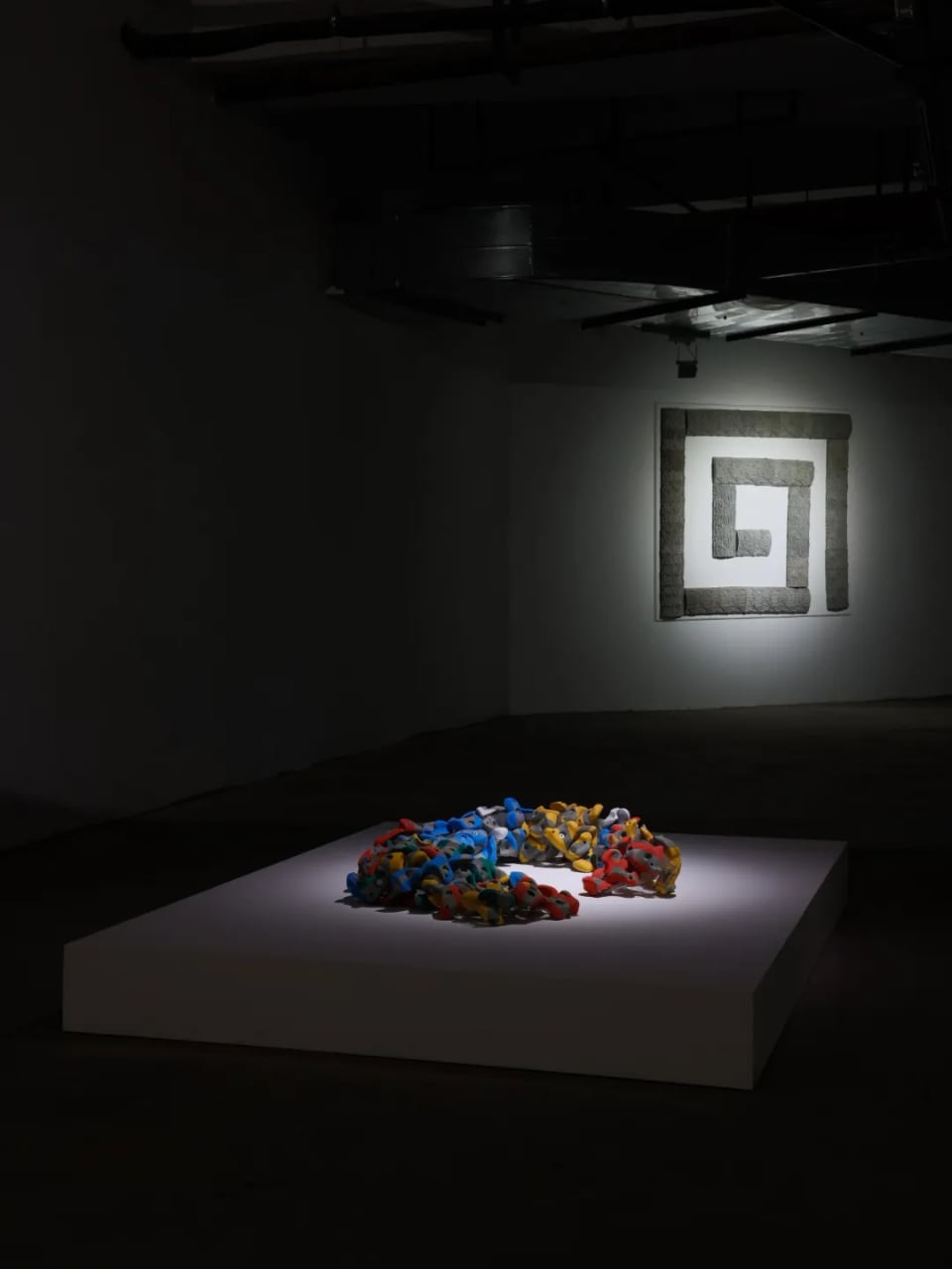
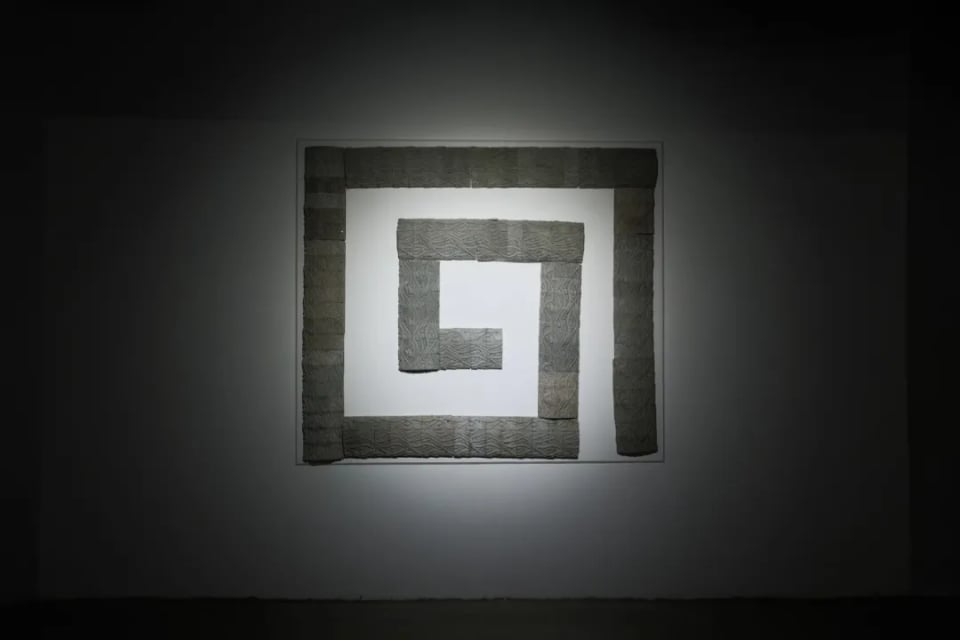
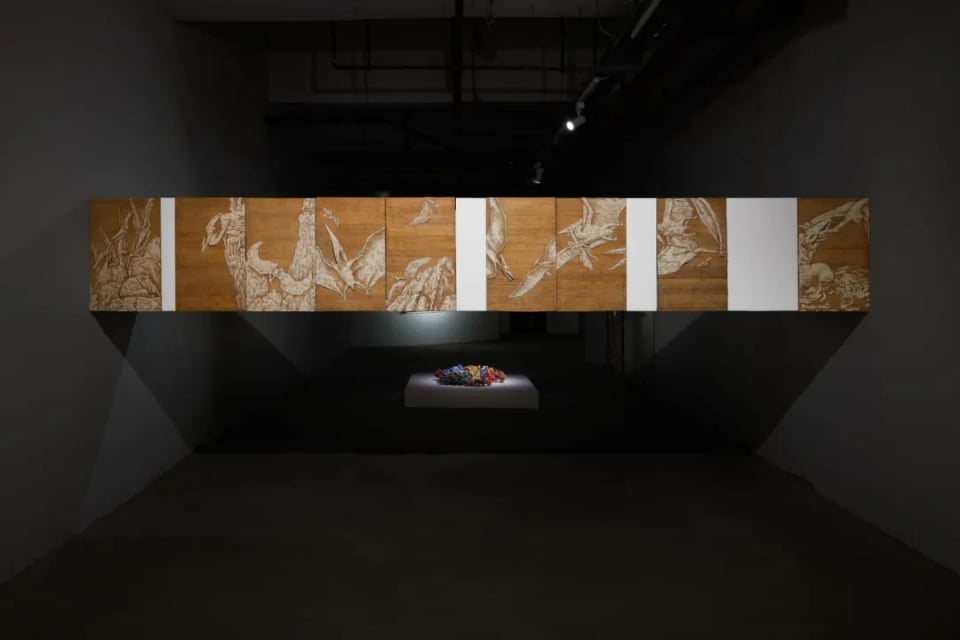
The artist repeatedly engages with what already exists: industrial climbing holds, 1990s video game environments, historical ornamental motifs, even broken remnants generated in the process of making. These elements are not simply cited, but translated, dismantled, and reassembled across contexts and media. Images move from digital to sculptural form and back again; nature shifts from material presence to model, becoming a raised and compressed interface. In an era marked by the overproduction of images and matter, artistic practice no longer points toward endless generation, but toward the redistribution and reactivation of what is already available. Through the reuse of shared visual material, the works propose a form of “visual ecology.” In this sense, decline is not a defect but an adjustment—a negotiation toward the optimal allocation of resources.
The posture of the Dust Eater thus becomes critical. She searches along the ground, extracting information at the smallest scale. Information cocoons become her servants; her sensory system registers the atmosphere itself, where each gas leaves a distinct trace. As the body lowers and vision is forced into proximity with detail and debris, another form of cognition begins to emerge—one that no longer depends on center or totality. The center dissolves into the periphery, giving way to a dispersed yet acute, almost holographic perceptual structure. The Dust Eater is not only a figure, but also a desire for recognition. When historical totems—meander patterns or vegetal forms—and personal memory are translated into homogenized pixel structures, images enter the logic of reproducibility and acquire a renewed public dimension. From here, the exhibition unfolds as a sustained inquiry: in a world increasingly overlaid by media, where information continuously reshapes our present condition, what happens when vulnerability escapes regulation? At that moment, the relation between master and servant begins to invert—and what was once granted as recognition reveals itself, perhaps, as a flaw.
Images of the exhibition